
Last updated November 15, 2026
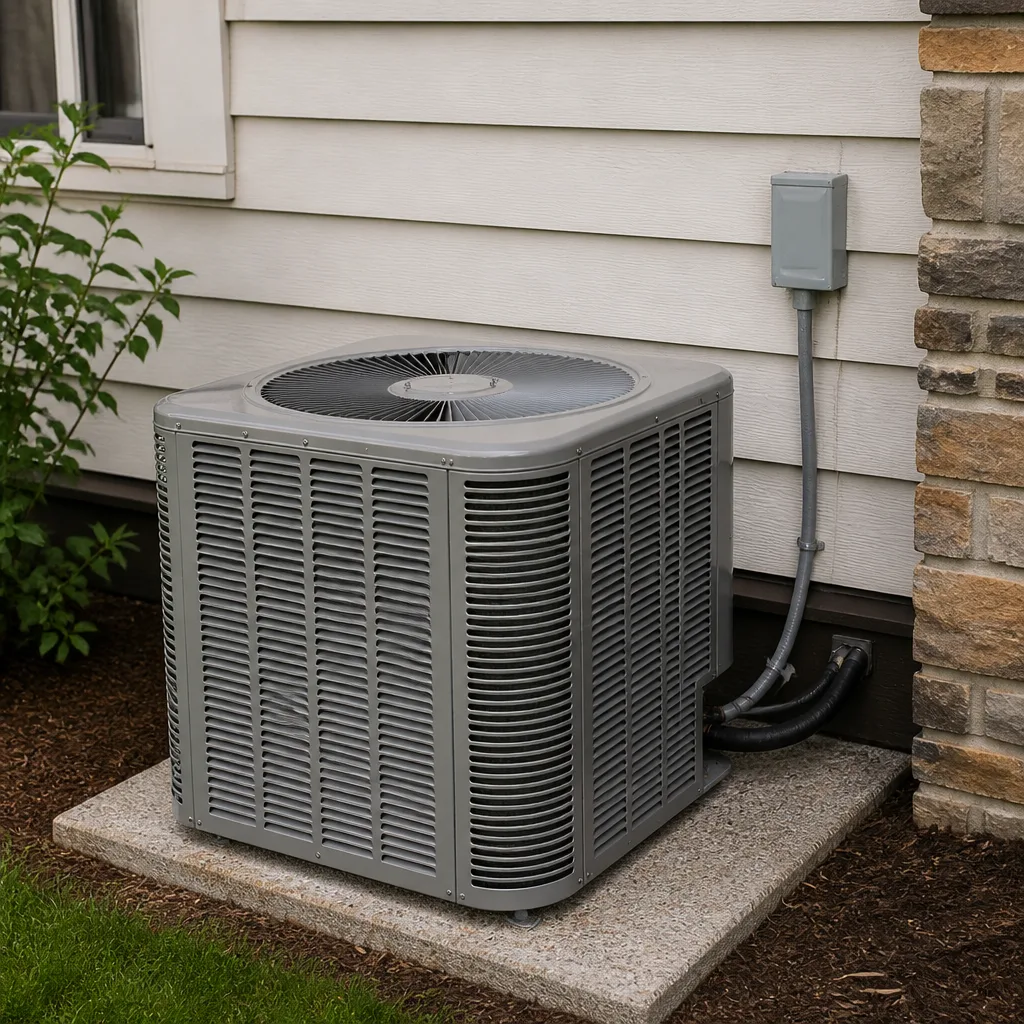 AC repair
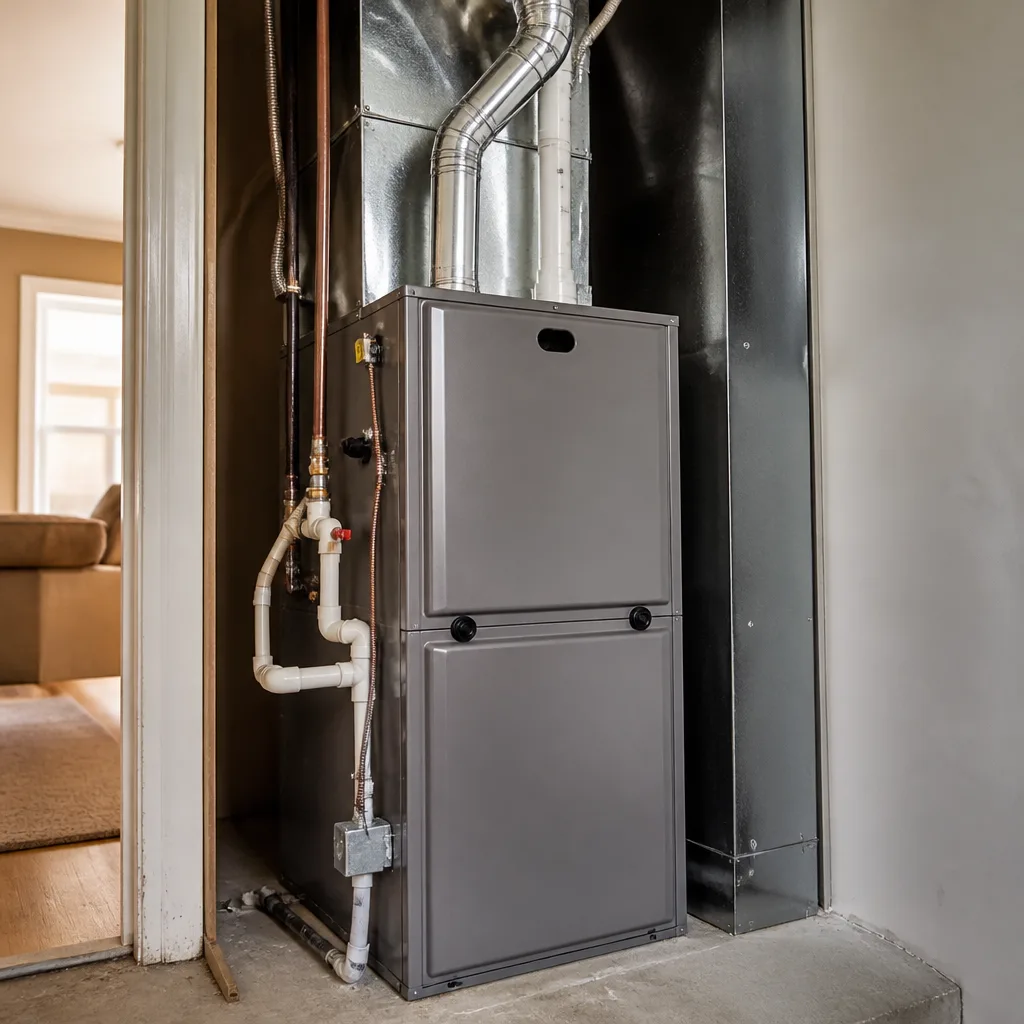 Furnace & heating
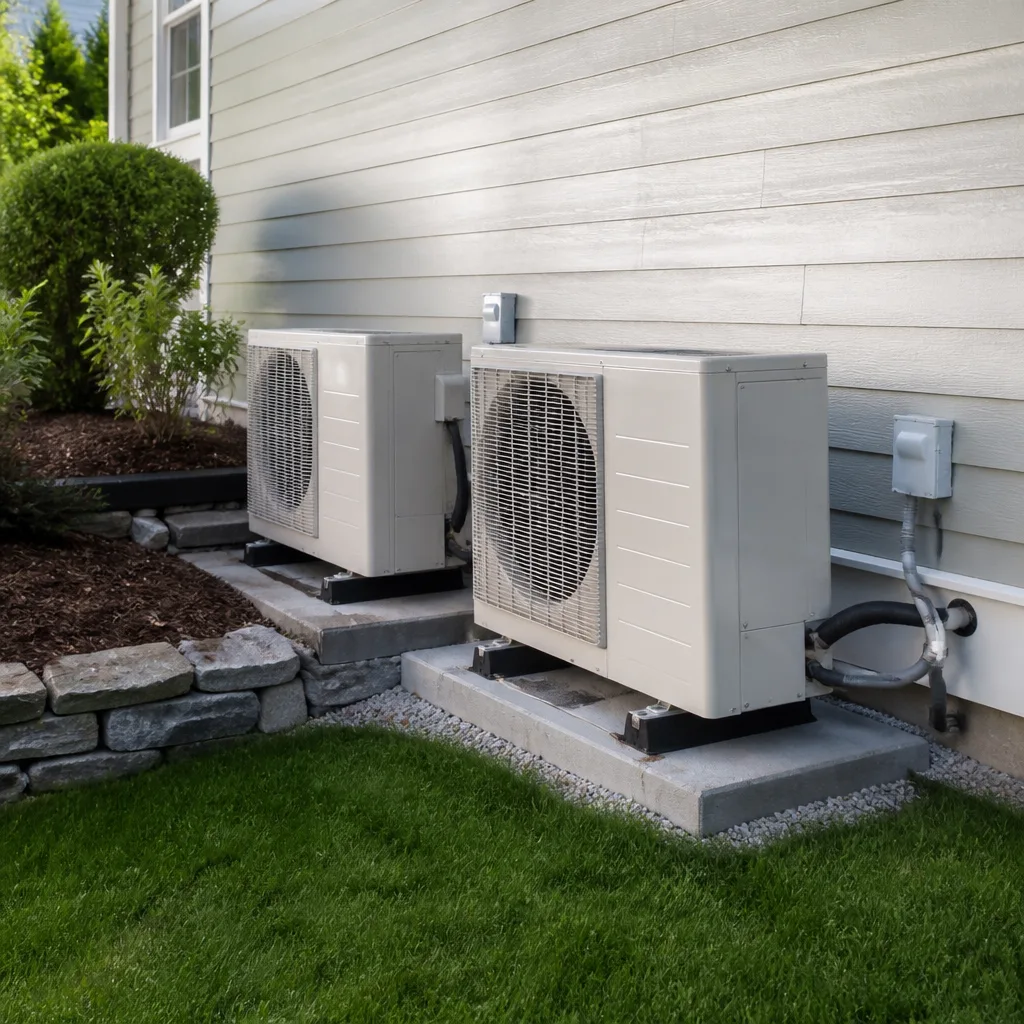 Heat pumps
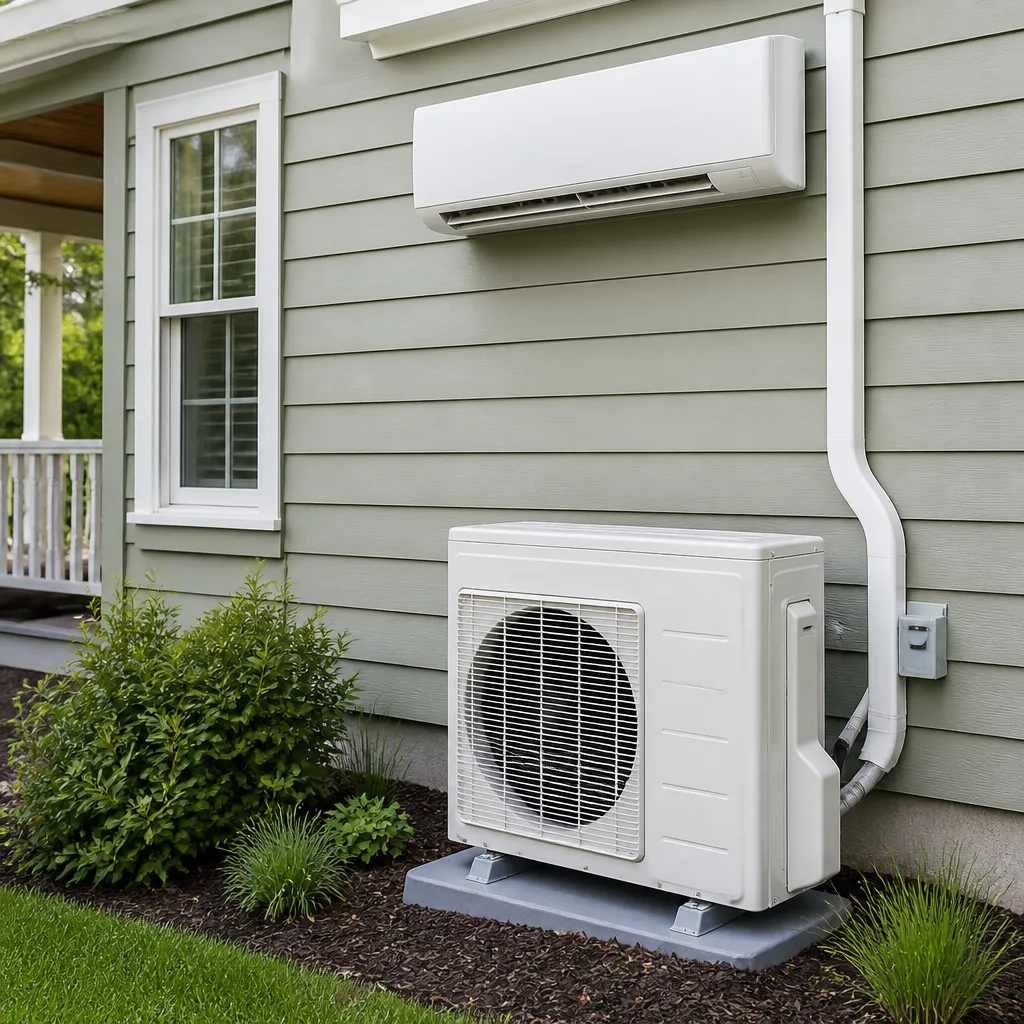 Ductless mini splits
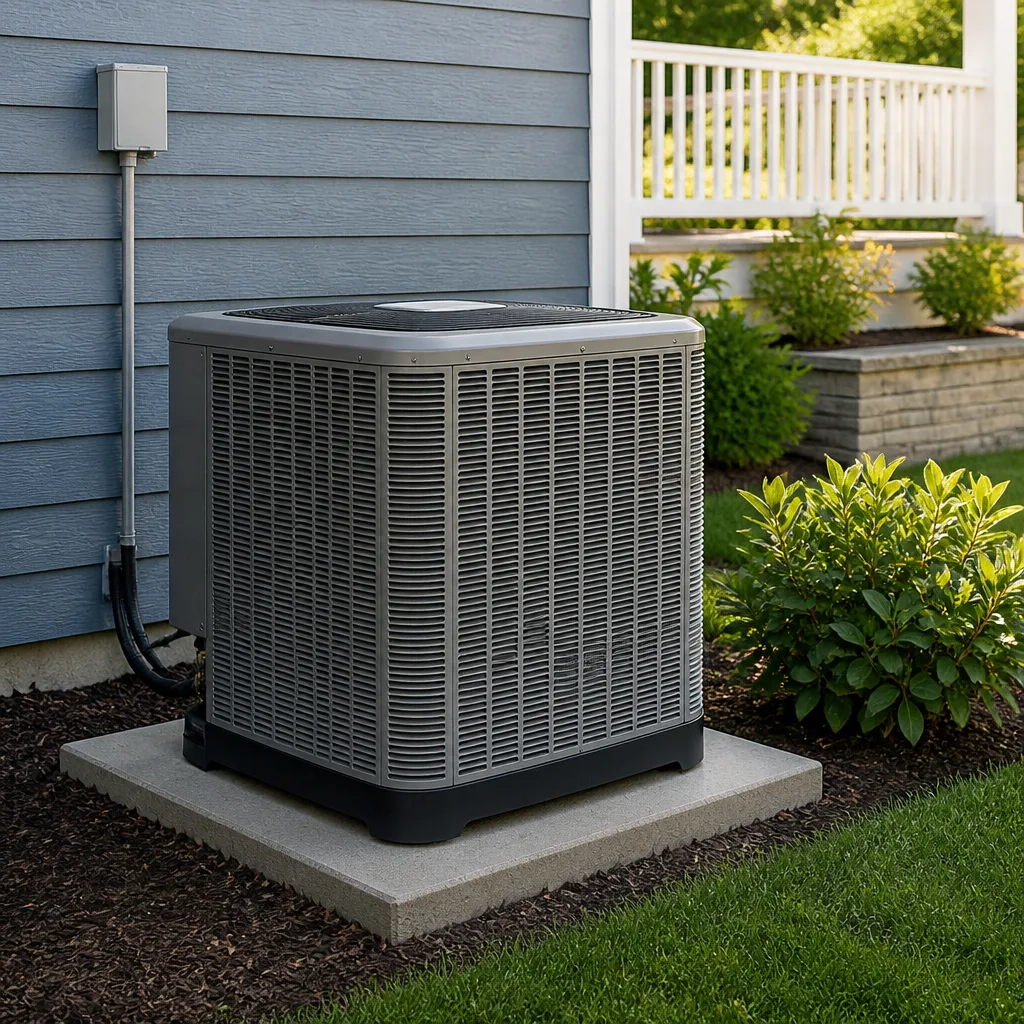 Carrier
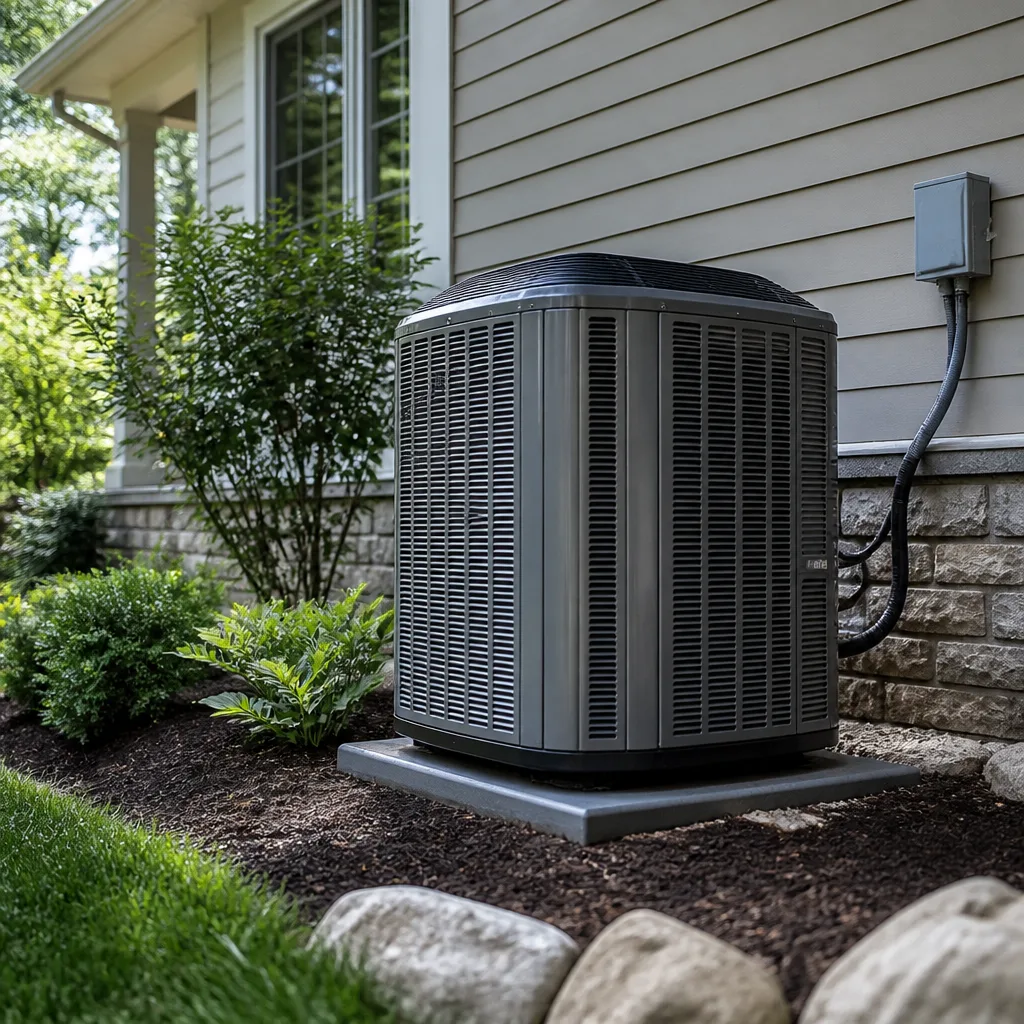 Trane
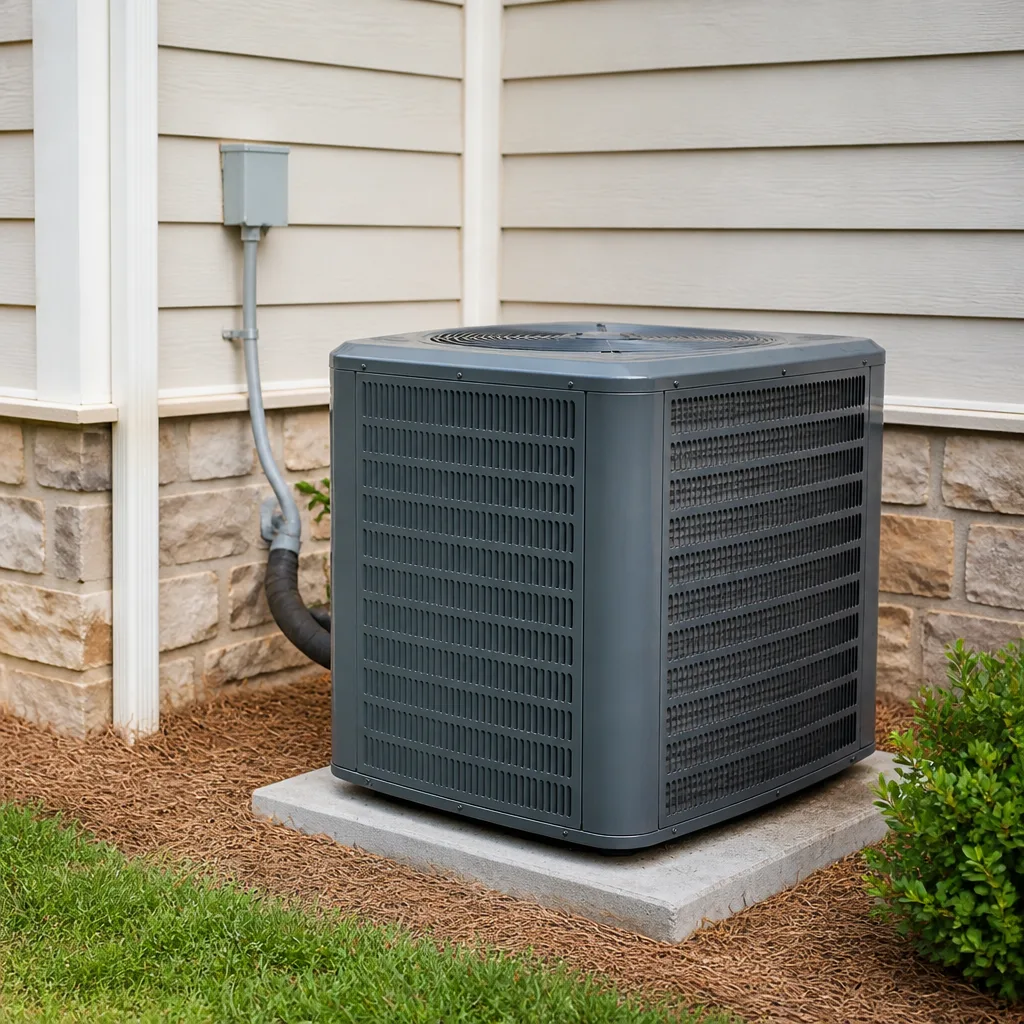 Goodman
Seasonal tune-up and full diagnostic on your Carrier, Trane, or Goodman system - readings shown to you before any repair is proposed
Diagnosis first, numbers second - you approve the repair price before a single part goes in.
Get your free estimateHVAC Warning Signs: A Lehigh Acres Homeowner’s Reference Guide
Most of what you read online about HVAC warning signs was written somewhere it snows. A system that “cools fine but just runs all the time” is a mild note in a northern climate and a genuine red flag in Lehigh Acres. Here, constant running in July means the equipment is pinned at full capacity with no reserve, and the next small failure becomes a no-cool emergency. This guide explains what each warning sign actually means in our heat and humidity, which ones give you a few days to act, and which ones mean calling today. It’s written for Lehigh Acres homeowners who want to understand their system, not guess at it.
Quick Answer
In Lehigh Acres, the HVAC warning signs that need same-day attention are: the system running nonstop without reaching the set temperature, ice on the indoor coil, water overflowing from the secondary drain pan, a hissing sound near refrigerant lines, burning or musty smells, and repeated breaker trips. Signs that usually give you a few days: mild short-cycling, one room that stays warmer than the rest, light clicking at startup, and rising indoor humidity. Any sign combined with a house that won’t get below the mid-70s during a hot week means the system has already lost its margin.
Styles & brands we work with
- AC repair
- Furnace & heating
- Heat pumps
- Ductless mini splits
- Carrier
- Trane
- Goodman
Table of Contents
- Why “It Cools Fine But Runs Constantly” Means Something Different Here
- Short-Cycling: When It’s Normal and When It’s Not
- Uneven Cooling and What Each Room Is Telling You
- Water and Moisture Warnings: Normal Condensate vs. a Real Problem
- Sound-Based Diagnostics: Clicking, Grinding, Hissing, Rattling
- Indoor Air Quality Signals Most Homeowners Miss
- Speed of Escalation in Southwest Florida Heat
- What These Signs Look Like on Common Local Brand Equipment
Why “It Cools Fine But Runs Constantly” Means Something Different Here
In Lehigh Acres, a system that runs nonstop while holding temperature is working at 100% capacity. That’s not normal operation, it’s the edge of failure. During a typical July, when afternoon temperatures climb into the mid-90s and the humidity sits high, a correctly sized and functioning system should cycle: run, satisfy the thermostat, pause briefly, run again. When it instead runs for hours without stopping and the house bounces between, say, 76°F and 78°F instead of reaching 74°F, the equipment has lost its reserve. Nothing is left for the afternoon peak.
Several things cause this in our climate:
- Low refrigerant charge. A slow leak means the compressor works harder and longer to move the same amount of heat. It’s the most common cause of long runtime with only slightly-off temperatures.
- Dirty condenser coil. Outdoor coils in Lehigh Acres collect dust, lawn clippings and pollen fast. A clogged coil can’t reject heat, so the system runs and runs.
- Restricted airflow. A clogged filter or a duct problem starves the coil, and the system can’t keep up.
- An undersized or aging system. A unit installed years ago for a smaller load, or one that’s simply worn out, can’t recover once it falls behind in a hot week.
The trap is that the house still feels cool, so the homeowner waits. In a northern climate, that calculus is reasonable. Here it isn’t: a system at 100% capacity has no room to absorb another problem, whether that’s a failing capacitor, a weak compressor contactor or a tripped breaker. What was a long runtime on Tuesday becomes no cooling at all by Friday of a 95°F week. If your system runs nonstop through a hot afternoon and never quite hits the set point, treat it as a warning, not a quirk. If you’re already seeing this pattern, our AC Repair Lehigh Acres page explains what a diagnostic visit covers.
Short-Cycling: When It’s Normal and When It’s Not
Short-cycling is when the system turns on and off in short bursts, often a few minutes at a time, instead of running through a full cooling cycle. In Lehigh Acres, a modest amount of cycling is normal: the compressor cuts out once the thermostat is satisfied, and in mild weather that can happen fairly often. What isn’t normal is a system that starts and stops every few minutes, over and over, all afternoon, especially when it does so without bringing the house to temperature.
Short-cycling points to one of several things, and the pattern helps narrow it:
- Cycles briefly, then stays off a long time: often a thermostat placed where it catches cold air from a vent, or a thermostat calibration issue reading the room wrong.
- Cycles every few minutes all day, house slow to cool: commonly an oversized system, low refrigerant, or a restricted filter. This is the one that wears out the compressor fastest, because every start draws a big current spike.
- Cycles and trips the breaker: this is an electrical fault. Stop running it and call a technician. Repeated breaker trips are a fire-risk signal, not a nuisance.
- Short cycles in the morning, longer runs by afternoon: often normal for a correctly sized system settling in.
The important distinction for Lehigh Acres homeowners is this: short-cycling that comes with a house that still cools is usually a comfort and wear issue; short-cycling that comes with a house that’s falling behind is an imminent-failure issue. The first can often wait a few days. The second shouldn’t. Our technicians have up to 14 years of experience and read these patterns for a living, which is why we start with a repair-first diagnosis instead of guessing.
Uneven Cooling and What Each Room Is Telling You
One warm bedroom in a Lehigh Acres house is a clue, not a verdict. Where the warm spot sits tells you a lot about what’s wrong.
- The upstairs or west-facing room is warmest. Heat gain through the roof and afternoon sun is the usual cause. That’s often a design or insulation issue rather than a broken AC, but a technician can confirm whether the system is delivering enough air to that room.
- The room farthest from the air handler is warmest. This usually points to duct leakage or a partially closed damper, or an undersized run. Air that has to travel far loses cooling through ducts in an attic that can hit well over 100°F in our summer afternoons.
- A room directly over the garage or next to a garage wall is stubborn. Common in newer Lehigh Acres subdivisions, where the garage wall is a big heat source. A slightly different supply or return balance often fixes it.
- Random warm rooms that change from week to week. This is often a refrigerant or airflow problem that’s affecting the whole system, showing up most in whichever room has the least air delivery. That pattern is worth a diagnostic call.
Wildly uneven cooling across a house, especially when it appears suddenly rather than gradually, is often the first sign of a refrigerant leak. The system cools the best-served rooms and lags everywhere else. Ask yourself: was this house comfortable across all rooms last summer? If the pattern changed, something changed in the system.
Water and Moisture Warnings: Normal Condensate vs. a Real Problem
Your AC removes a lot of water from the air in Lehigh Acres, and that’s supposed to happen. A properly running system in our humidity produces a steady trickle of condensate from the condensate line to the outside drain. What you need to learn is the difference between that trickle and the signals that mean stop and call.
Normal: water dripping from the outdoor condensate discharge, on hot days especially. Wetness on the suction line (the larger insulated pipe) at the outdoor unit. Some condensation on the indoor coil cabinet if it’s exposed.
Not normal – investigate today:
- Water pooling inside the air handler closet or around the indoor unit. Typically a clogged condensate drain line or a backed-up primary pan. In our humidity this happens fast, because the line carries a lot of water.
- Water in the secondary drain pan, or dripping from the secondary drain line (the one you may not have known you had). This pan activating means the primary drain has failed and the system is running on its last backup. That’s a same-day issue.
- Water stains on the ceiling or a wet patch growing under the indoor unit. This usually means the pan is overflowing or the unit is leaking from a frozen coil that melted. Turn the system off to stop making more water, and call.
- Hissing or bubbling at the outdoor unit, or oily residue on the brass fittings. These are potential refrigerant leak indicators. Refrigerant is a controlled substance and needs a licensed technician. It’s also a health and environmental concern, so it isn’t a wait-and-see item.
Frozen lines look like water’s opposite, but they’re related. A coil that ices over is starving for airflow or low on charge. If you see frost on the indoor lines or the outdoor unit, turn the system off and call. The frozen coil will melt and can overflow the pan. For our full scope on this kind of call, AC repair covers the diagnostic side.
Sound-Based Diagnostics: Clicking, Grinding, Hissing, Rattling
Sound is one of the most reliable early warning tools a homeowner has, and one of the least used. On the equipment we see in Lehigh Acres homes – whether it’s a Carrier, a Trane, an American Standard or another major brand – the type of sound tells you a lot about what’s wearing and how urgent it is.
Clicking
A single click when the system starts is the contactor engaging. That’s normal. Repeated clicking at startup – click, pause, click, pause, no run – usually points to a failing capacitor or contactor, low voltage at the thermostat, or a safety switch stopping the compressor. Repeated clicking that ends in no cooling is often a cheap part failing before it takes the compressor with it. That’s a call-today scenario, because the compressor is the expensive part.
Grinding
A grinding or screeching sound from the outdoor unit is almost always a motor bearing or a blower issue. On the indoor unit, a grinding sound can mean the blower wheel is hitting its housing after the motor has degraded. Grinding rarely gets better and often ends in a seized motor. In our climate, a seized condenser fan motor in July means an overheated system within hours. Call today.
Hissing
Hissing can be two different things. A hiss at the outdoor unit, sometimes with bubbling or an oily residue, points to a refrigerant leak. Never try to top up a system yourself; refrigerant is a controlled substance needing a licensed technician and the right equipment. A hiss from the ducts can be air leaking from a seam or joint – less urgent, but still worth addressing, since leaking ducts make the system work harder in the heat.
Rattling
A rattle is usually mechanical or a panel issue. Loose covers, a fan blade that’s lost a screw, or debris inside the unit are common. Rattling alone is often low urgency, but if it’s paired with vibration you can feel through the wall or floor, it can indicate a failing fan or mount that will eventually damage the motor. Get it looked at before it does.
Indoor Air Quality Signals Most Homeowners Miss
HVAC problems don’t just show up as temperature issues. In Lehigh Acres, some of the loudest signals are about air, and they’re the easiest to write off as allergies or “just summer.”
- Musty odors when the AC runs. A musty smell inside the house when the system starts usually means biological growth somewhere in the cooling path – often the indoor coil, the drain pan, or the plenum. In our humidity, a pan that never fully drains or a coil that stays wet between cycles becomes the perfect environment. A musty smell isn’t a reason to paint over it; it’s a reason to have the system inspected.
- Allergy symptoms that spike when you’re home. If symptoms are worse indoors than out, suspect the HVAC system. A clogged filter, a dirty blower wheel, or growth on the coil circulates irritants into every room. If the filter is clean and symptoms continue, the coil is the next place to look.
- Fog on windows or sweating on inside surfaces. Condensation on interior windows, or a clammy feel in the house even when the AC is set cool, means indoor humidity is too high. The system may be cooling but not dehumidifying properly. That’s often low refrigerant or an airflow issue, or a system too large for the space. Humidity control issues are common in newer Lehigh Acres homes with tighter construction and less natural air exchange.
- Static and dust visible in sunbeams. Excess dust that settles quickly after cleaning is a sign the system is moving air it shouldn’t. Check the filter first, then have a technician check the return and blower.
Air quality problems are rarely emergencies, but they’re genuine signals that the cooling side of the system isn’t performing as designed. A system that cools well but leaves the house clammy is working, just not correctly.
Speed of Escalation in Southwest Florida Heat
This is the section competitors skip, and it’s the most important one for a Lehigh Acres homeowner. In a mild climate, a warning sign is a decision you make on your own schedule. Here, some signs give you days and some give you hours. Here’s the honest split.
Act today (same-day service)
- No cooling at all during a hot week. A house with no cooling and no ventilation becomes a health hazard for older adults, young children and pets within hours.
- Ice or frost on the indoor coil or lines. Turn the system off to stop making more water and call.
- Water overflowing the secondary pan or leaking from the indoor unit.
- Hissing and oily residue at the outdoor unit (possible refrigerant leak).
- Burning smell or repeated breaker trips. Turn the system off and call. This is a fire-risk signal.
- Grinding from either unit, or a compressor that clicks repeatedly at startup without running.
Act within a few days
- Constant running that still maintains temperature. It’s on the edge; don’t wait a week.
- Short-cycling that still cools the house.
- One room that lags behind, appearing gradually.
- Rising humidity, clammy air, or musty smell.
- Rattling or a single clicking sound.
- Higher electricity use compared with the same month last year, with no other change.
The reason we split it this way is that Lehigh Acres heat load removes the margin. In a cooler climate, an underperforming system might coast for weeks. Here, a system at 100% capacity on a 95°F afternoon has almost no reserve. The signs on the first list tend to fail completely within a day or two. The signs on the second list tend to fail within a week to ten days, or right when the next hot stretch arrives. Both lists are worth acting on. Only one of them gives you a choice about when.
What These Signs Look Like on Common Local Brand Equipment
HVAC systems share the same basic components, so warning signs repeat across brands. But each manufacturer designs certain parts differently, and knowing the equipment matters at diagnosis. We’re certified to service nine of the most widely installed residential brands – Carrier, Trane, Lennox, Goodman, Rheem, York, Daikin, Bryant and American Standard – which covers the vast majority of systems in Lehigh Acres homes. When we arrive, we can look at what you already have and diagnose it, rather than steering you toward a brand swap.
A few examples of how brand knowledge matters with the same warning sign:
- Short-cycling on a Carrier unit often traces back to a failing capacitor, a common wear item on thousands of local installs. That’s a repair, not a replacement.
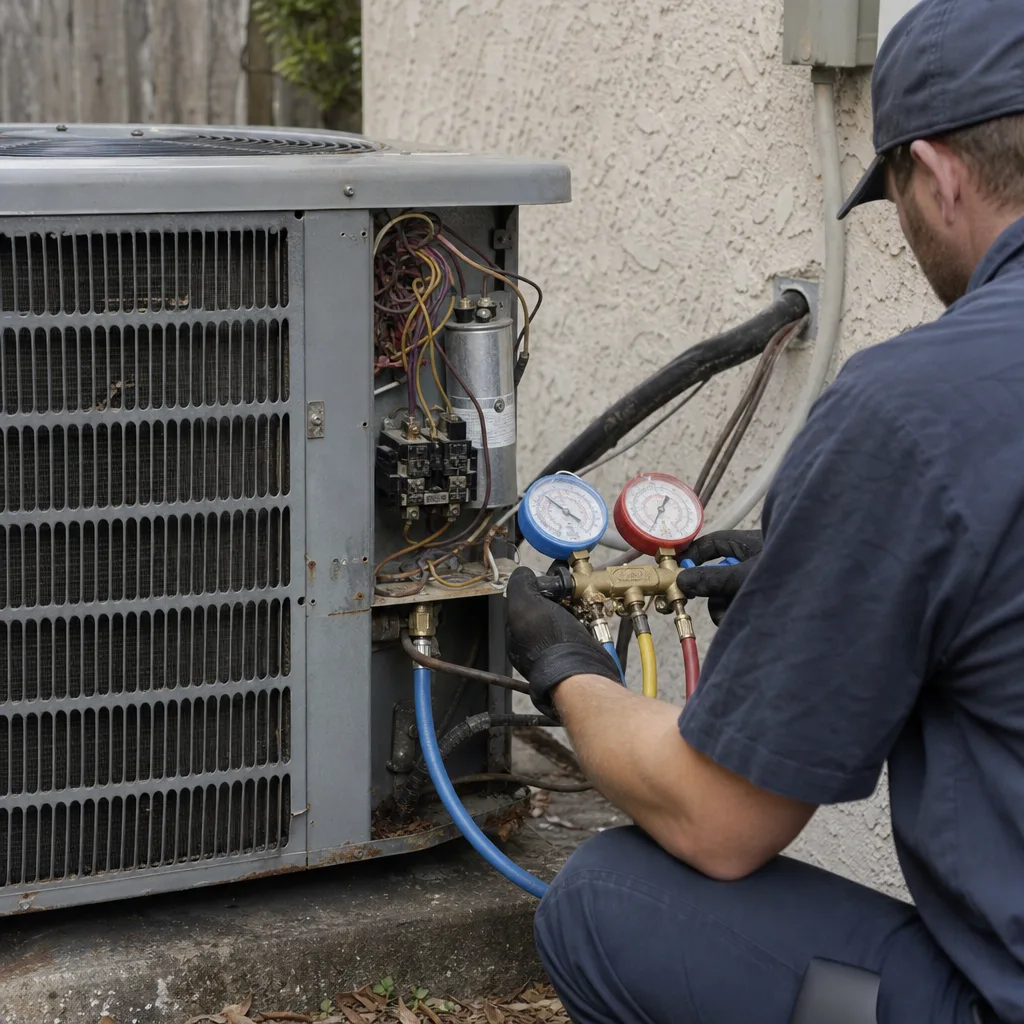
- Continuous runtime on a Trane system is frequently a refrigerant charge issue. Reading the pressures correctly on that equipment is the difference between fixing it and throwing parts at it.
- Musty odors and drain backups on a Lennox or American Standard unit often come down to the coil and pan design and how well the drain line is pitched. Getting the drain right is what stops it recurring.
- Grinding from a Goodman condenser fan – a common brand in newer local homes – is usually the fan motor, a routine repair if caught before the compressor cooks.
Our technicians have up to 14 years of experience, and our entire focus is HVAC: AC repair, AC installation and furnace repair. We don’t do plumbing, roofing or general repair. That single-trade focus is why the diagnosis tends to be faster and why the answer is usually “we can repair what you have” – whether it’s your Carrier, your Trane or your Goodman. And because we cover both cooling and heating, the same company that handles your summer AC can handle your furnace side when the season turns. If you’re facing a replacement decision, our AC installation page explains what a new system involves here. Our technicians diagnose before recommending installation, and not every warning sign means a new system.
Common Mistakes to Avoid
- Waiting out “it still cools, just runs a lot.” In Lehigh Acres heat, this one has the shortest fuse of any comfort-signal warning. A system with no reserve can fail by the end of the week. If it runs nonstop and can’t reach set point, call.
- Running the system with a frozen coil. Turning it off is the first step. Running it ices the coil further and can push water into the pan and, in bad cases, the ceiling. Ice and water are related problems – treat them as one call.
- “Topping off” refrigerant yourself or having it done without finding the leak. Refrigerant is a controlled substance that requires a licensed technician. A charge with no leak repair is a temporary and expensive patch.
- Ignoring the secondary drain pan. Many homeowners don’t know they have one. If it’s wet, the primary drain has failed already. That’s the system running on its safety net, and the net fills up fast in our humidity.
- Writing off a musty smell as “Florida humidity.” A musty smell when the AC runs is usually biological growth in the cooling path. It affects your air quality every day you run the system.
- Replacing a system to fix a repair-sized problem. A system that’s short-cycling or noisy doesn’t always need a replacement. Repair-first diagnosis is what tells the difference. Any contractor who jumps to replacement without a diagnosis should be a second opinion.
- Assuming another hot week is coming when it’s autumn. In Lehigh Acres, the heat load can persist into the fall. A warning sign in October can still be an emergency. The season changes later here than what you read online.
See the difference
 Before
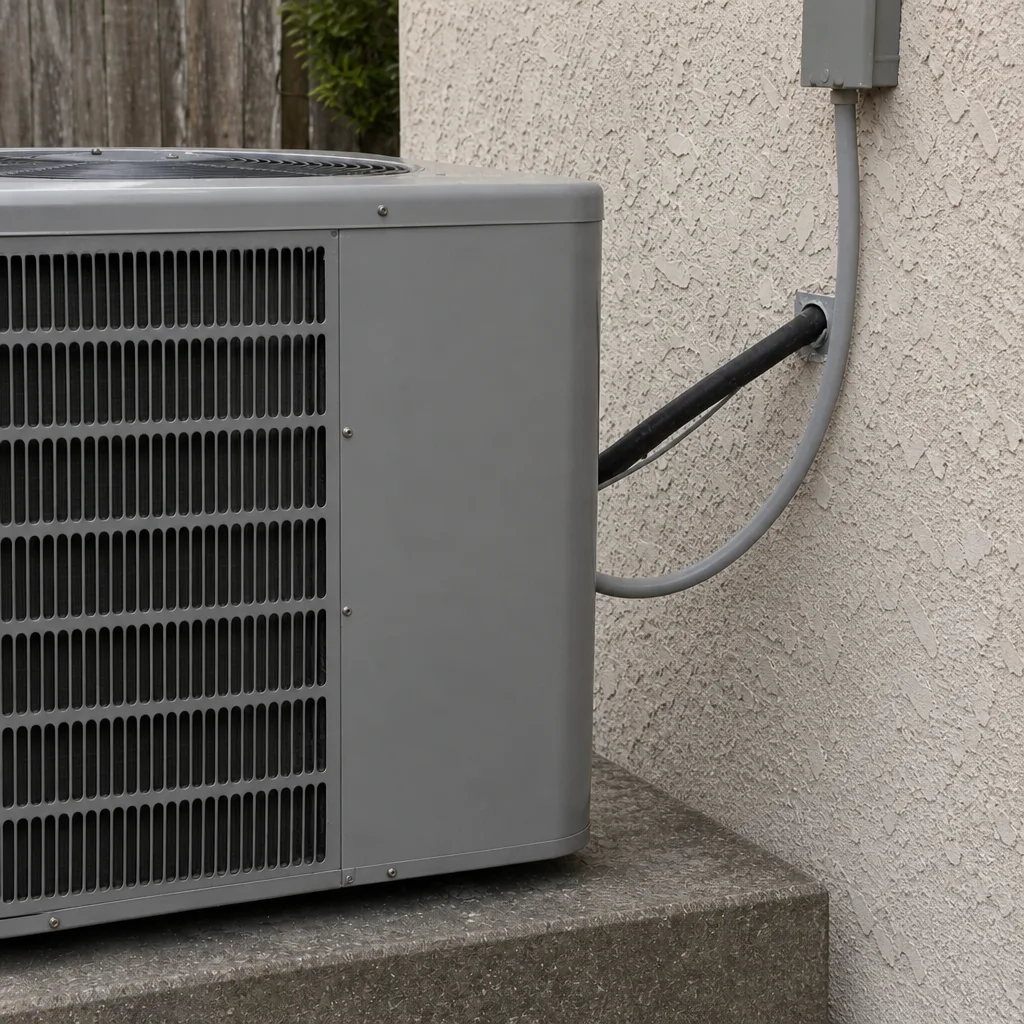 After
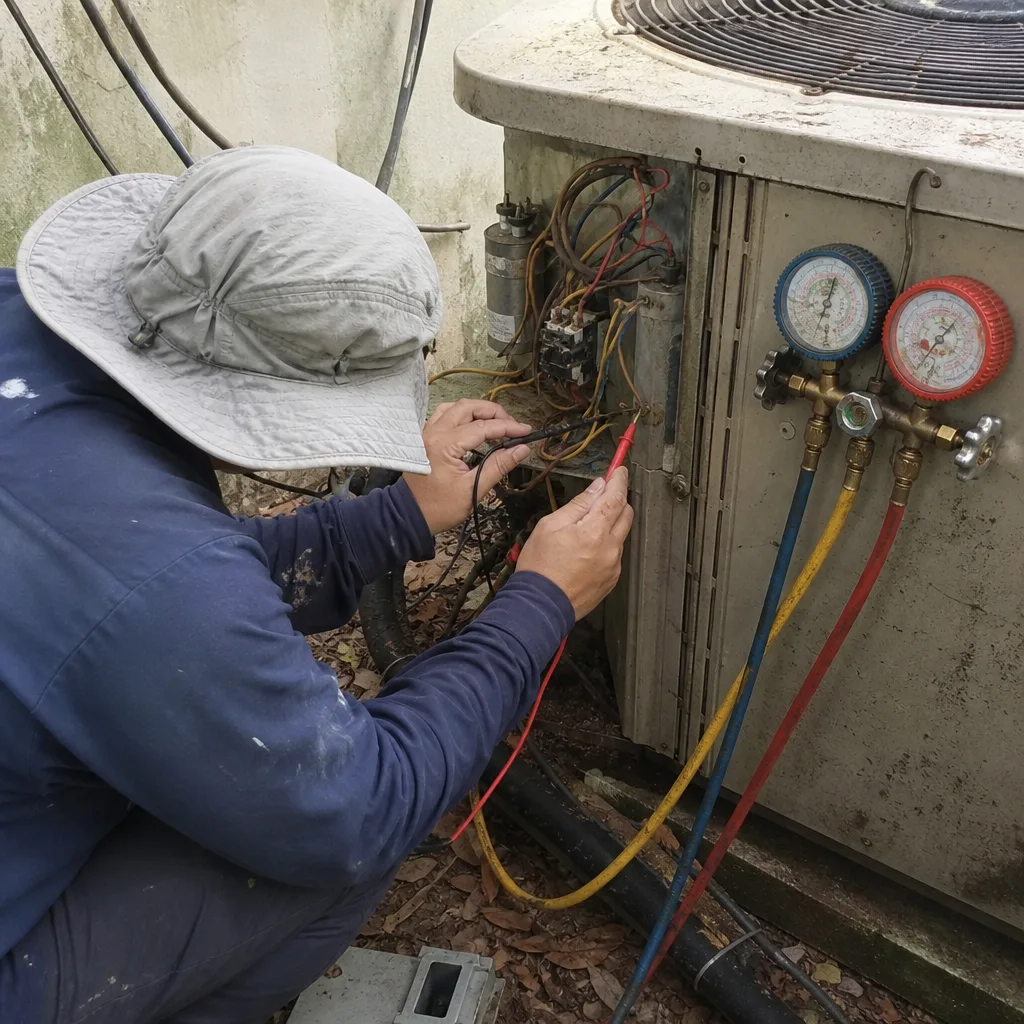 Before
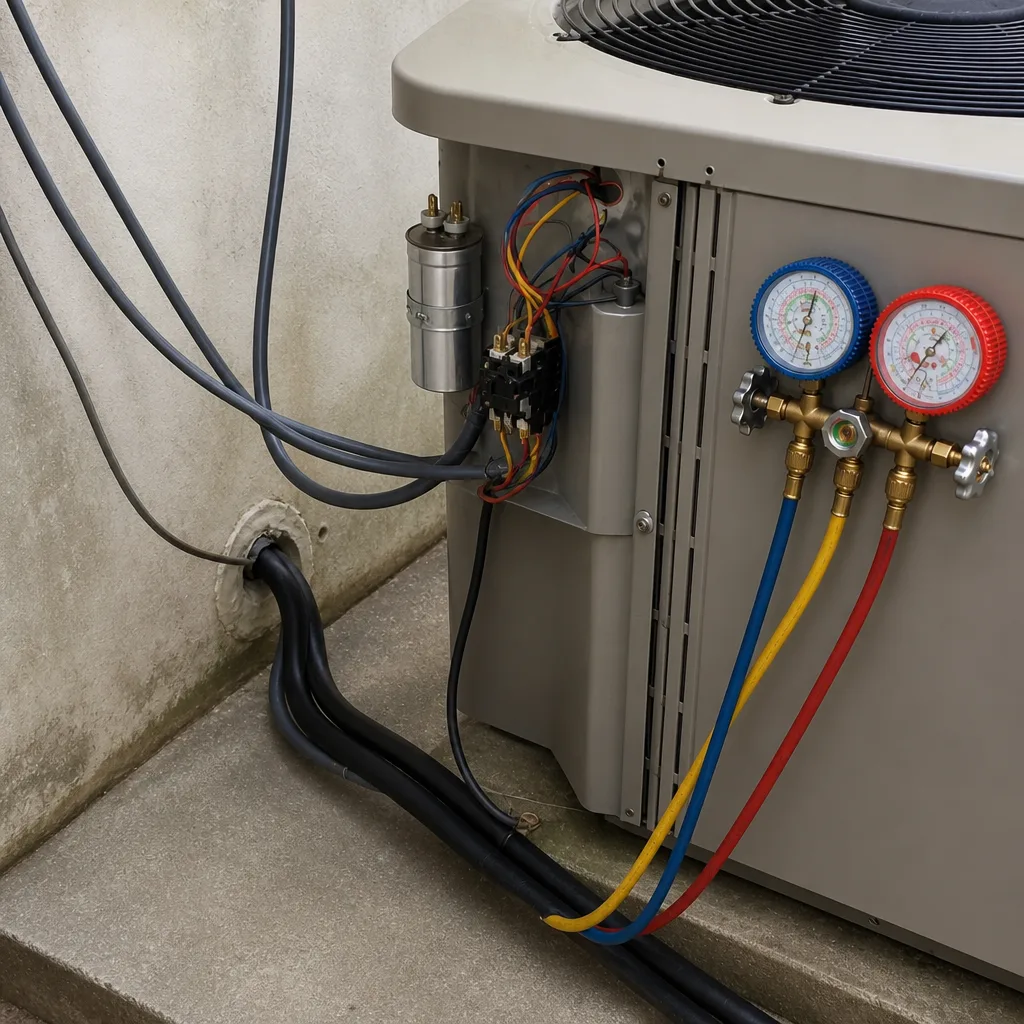 After
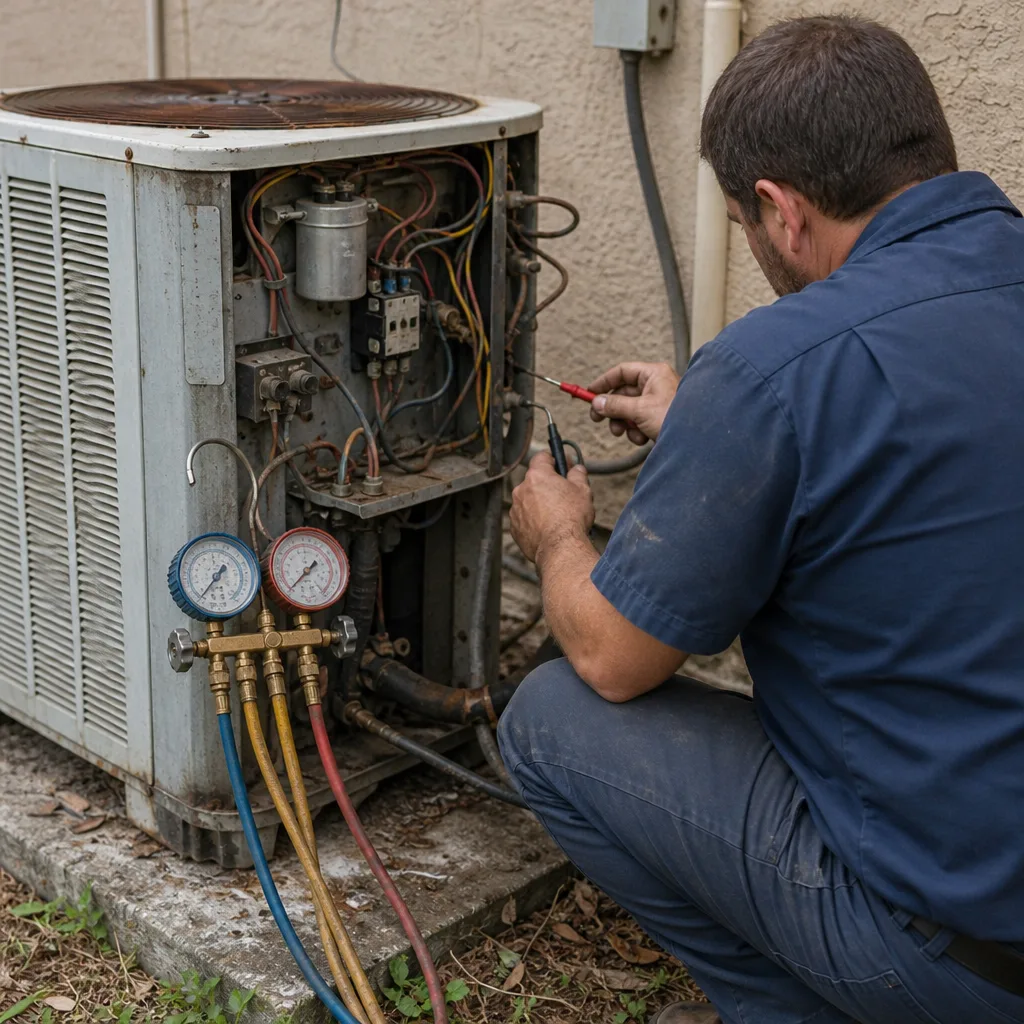 Before
 After
When to Call a Professional
Call a licensed HVAC technician if your system is running nonstop without reaching the set temperature, if you see frost or ice on any part of the system, if the secondary pan is wet or leaking, if you hear grinding from either unit, if the breaker tripping repeats, or if the house is clammy and musty even when it’s cooling. Also call when the decision isn’t obvious to you. That’s what a diagnostic visit is for. Our technicians have up to 14 years of experience, and we work on the brand you already own rather than pushing a preferred line. AC Repair Lehigh Acres offers free estimates in Lehigh Acres – call (866) 389-4593. We answer 24/7. Fast dispatch from 7am to 7pm, Sunday through Friday.
Frequently Asked Questions
The most reliable early sign is a system that runs continuously through a hot afternoon and never quite reaches the set temperature. In our heat, that means the equipment is at 100% capacity with no reserve. The next problem – a failed capacitor, a dirty coil, a weak contactor – finishes it. Call (866) 389-4593 for an exact quote; estimates are free.
It’s normal for a system to run long stretches on the hottest afternoons, but it isn’t normal for it to run all day without reaching the set point. Running long and reaching temperature is fine. Running nonstop and falling behind is a warning. In that case, book a diagnostic – our Lehigh Acres page explains how we handle local service calls.
A steady trickle from the outdoor condensate line on hot days is normal. Water inside the air handler closet, a wet secondary pan, or a ceiling stain is not. Those mean the primary drain has failed or a coil is frozen and melting. Turn the system off and call (866) 389-4593 for an exact quote; estimates are free.
Grinding is serious and worth a same-day call. It usually means a failing motor bearing, and a seized fan motor in a Lehigh Acres summer can overheat a system within hours. Rattling alone is usually less urgent – often a loose panel or something inside the unit – but it’s worth checking before it damages the fan.
Most warning signs in this guide are repair-sized, not replacement-sized. We diagnose first and tell you what the fault actually is. Replacement makes sense when the compressor itself has failed, when a refrigerant leak can’t be located or repaired economically, or when repeated failures suggest the equipment is at the end of its service life. We don’t recommend a new system unless the diagnosis supports it. Call (866) 389-4593 for an exact quote; estimates are free.
For signs on the same-day list – no cooling, ice, water in the secondary pan, grinding, a refrigerant hiss, repeated breaker trips – call (866) 389-4593 right away. We answer 24/7, and fast dispatch runs from 7am to 7pm, Sunday through Friday. A call outside dispatch hours is booked into the next opening. We’re closed Saturday. Estimates are free.
The Bottom Line
In Lehigh Acres, HVAC warning signs escalate faster than the standard online descriptions suggest. Continuous running, short-cycling and uneven cooling behave differently here because the heat load removes the system’s reserve. Water signs – a clogged drain or a wet secondary pan – are urgent in our humidity. Sound signs split cleanly: grinding and repeated clicking are same-day calls, rattling can usually wait a few days. Air quality signs tell you the system is cooling but not dehumidifying as it should. Know which list each sign goes on, and don’t wait out a system that’s running at 100% capacity. Call (866) 389-4593 for a free estimate. We answer 24/7. Fast dispatch from 7am to 7pm, Sunday through Friday.
Written by the team at AC Repair Lehigh Acres.