
Last updated November 15, 2026
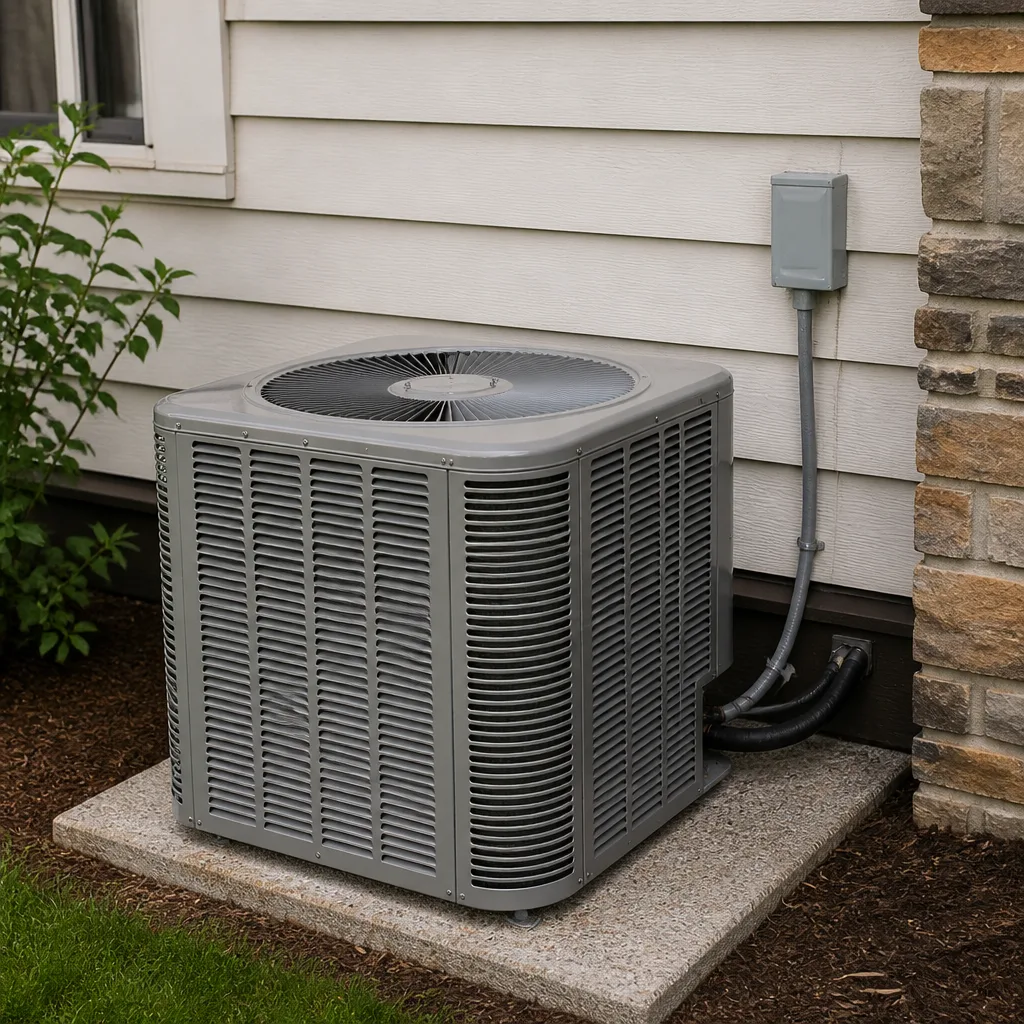 AC repair
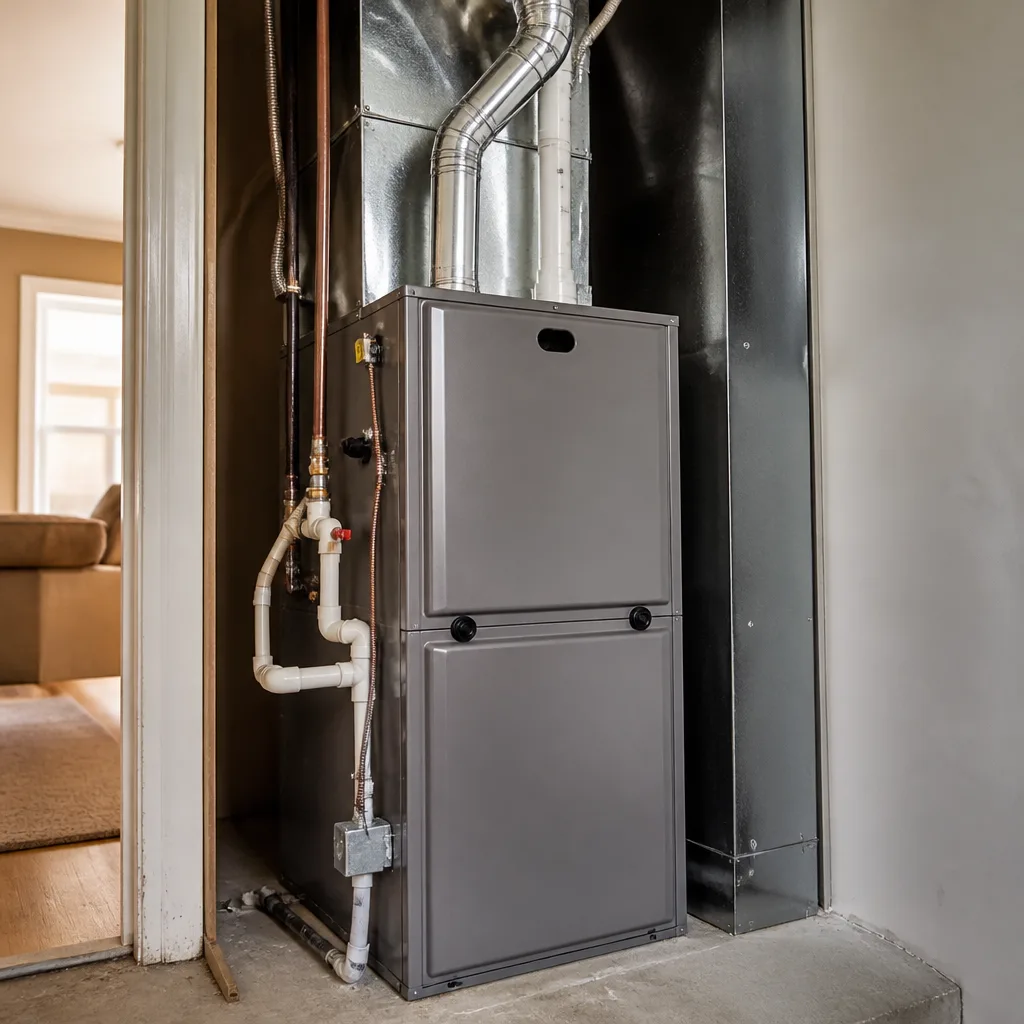 Furnace & heating
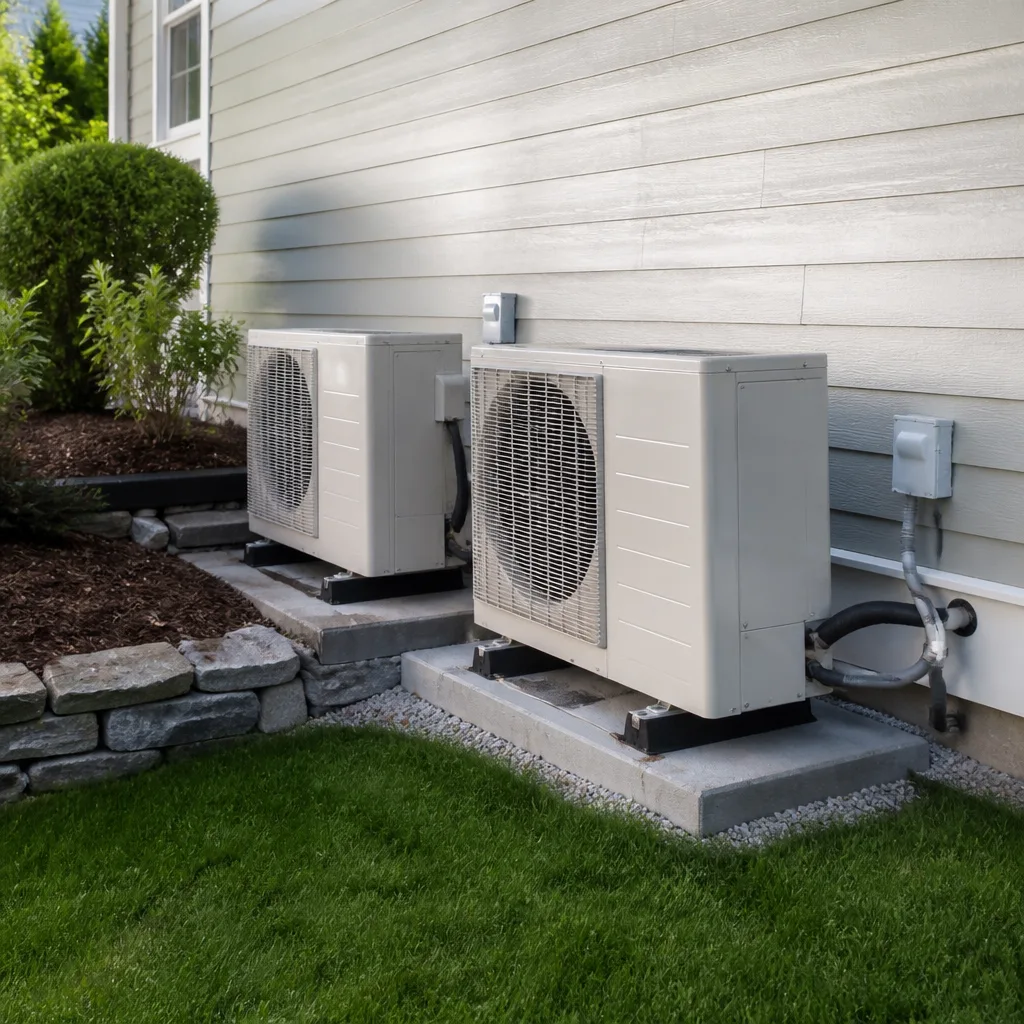 Heat pumps
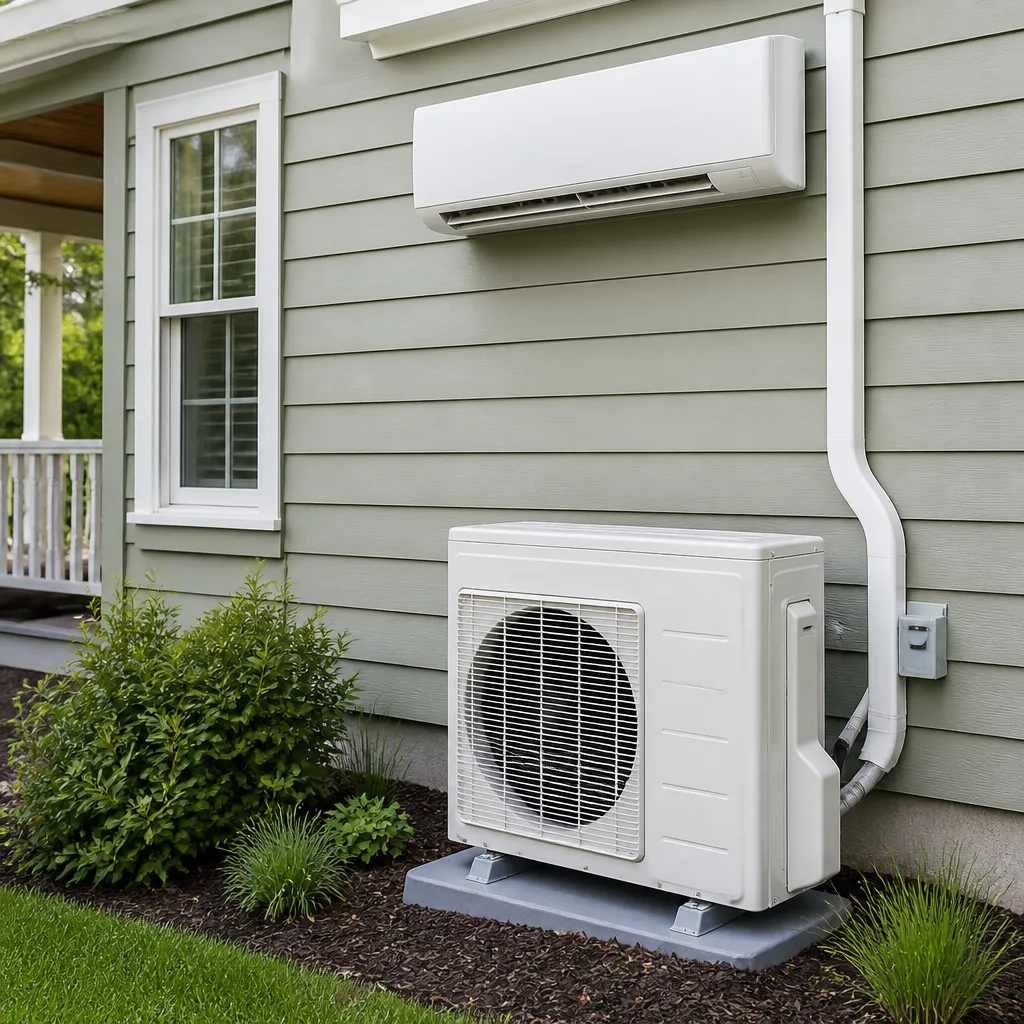 Ductless mini splits
 Carrier
 Trane
 Goodman
Seasonal tune-up and full diagnostic on your Carrier, Trane, or Goodman system - readings shown to you before any repair is proposed
Diagnosis first, numbers second - you approve the repair price before a single part goes in.
Get your free estimateAC Repair Troubleshooting in Lehigh Acres: Common Problems and How to Fix Them
Most AC troubleshooting guides are built on a single assumption: that you’ll get nervous after the first checklist and call someone. That’s a wasted step. Before any technician arrives in Lehigh Acres, you can narrow the problem down yourself using the same diagnostic logic we use on service calls every day. Is it the breaker, the float switch, a bad capacitor, a refrigerant leak, or a seized compressor? Each leaves a different trail. This guide walks through that trail symptom by symptom, tells you which fixes are safe to handle yourself and which legally require an EPA-certified technician, and shows you what to say when you do call so the visit is shorter and the diagnosis is right the first time.
Quick Answer
The most common AC problems in Lehigh Acres are tripped breakers, clogged condensate drain lines with a float switch that shuts the system down, failed run capacitors, dirty filters, and low refrigerant from a leak. A homeowner can safely check the breaker, filter, float switch, and thermostat settings. Anything involving refrigerant, compressor internals, or electrical components beyond the breaker requires a licensed, EPA-certified technician.
Styles & brands we work with
- AC repair
- Furnace & heating
- Heat pumps
- Ductless mini splits
- Carrier
- Trane
- Goodman
Table of Contents
- Symptom-to-Cause Map: What Your AC Is Telling You
- Clogged Condensate Drain and the Float Switch
- What You Can Safely Check vs. What Requires a Certified Technician
- Reading Thermostat Error Codes Across Common Brands
- Warm Air From the Vents: Diagnosis in Order of Likelihood
- Short Cycling and Ice Buildup on the Coil
- Water Around the Air Handler and No Power at All
- What to Tell the Technician When You Call
Symptom-to-Cause Map: What Your AC Is Telling You
An air conditioner fails in one of a handful of ways, and each failure looks different on the outside. Learning to read the symptom first cuts the diagnostic time almost in half. Here is how the five most common complaints map to the components behind them.
- Warm air from the vents: the compressor isn’t running. Most often a tripped breaker, a failed capacitor, or a contactor that won’t close. Low refrigerant is also possible but less common as a sudden, total loss of cooling.
- System runs but short cycles (on 2-3 minutes, off a few minutes, repeat): an oversized unit, a dirty filter choking airflow, a failing capacitor, or a refrigerant charge that’s off. A thermostat placed near a heat source can also be the culprit.
- Ice on the indoor coil or the outdoor refrigerant line: restricted airflow from a clogged filter or blocked coil, or low refrigerant from a leak. Ice is a symptom, never the problem itself.
- Water pooling around the air handler: a clogged condensate drain line, a stuck float switch, an algae-clogged trap, or, less often, a cracked drain pan.
- No power at all: typically a tripped breaker, a blown low-voltage fuse on the control board, or a float switch that has shut the system down as a safety measure.
Lehigh Acres sits in a humid subtropical stretch of Southwest Florida where the AC runs almost continuously from spring into fall. That constant runtime surfaces certain failures more often than others. Capacitors wear out faster. Drain lines grow algae quickly in warm, wet conditions. Coils pick up a film of debris that reduces heat transfer. Knowing the local pattern is half the diagnosis, and a technician who works in the same climate day after day reads it instantly.
Clogged Condensate Drain and the Float Switch
A clogged condensate drain line with a float switch that has tripped is the single most common non-emergency call we run across in Lehigh Acres. It’s also the one homeowners can usually resolve in under ten minutes.
Here’s what happens. As your AC pulls humidity out of the air, that moisture collects on the evaporator coil and drips into a pan below it. The pan drains through a PVC line to the outside of the house. Over time, algae, dust, and biofilm build up inside that line and narrow it, then close it. When the water in the pan rises far enough, a small float switch rises with it and cuts power to the system on purpose so the pan doesn’t overflow into your ceiling or walls.
The fix follows a simple, safe sequence:
- Turn the thermostat to OFF. Confirm the system has stopped before you touch anything.
- Locate the float switch. It’s usually a small plastic block wired into the drain line or clipped to the side of the pan near the air handler. It may be tucked behind the filter door or mounted on the line just after the pan.
- Find the drain line exit. Trace the PVC line to where it exits the house, or find the cleanout tee near the air handler.
- Clear the line. If you have a wet/dry vacuum, seal it over the outdoor drain end and run it for a minute or two to pull the clog through. Alternatively, pour a cup or two of distilled white vinegar into the cleanout tee and let it sit before flushing with water.
- Reset the switch. Once water drains out of the pan, the float drops back and restores power. Some switches have a manual reset button; check the small tab on the switch body.
- Turn the thermostat back to COOL. Watch the pan for the next hour. If water returns, the clog is still there and it’s time to call a trained technician.
What you shouldn’t do: bypass the float switch, tape it up, or wire around it. That switch is the safety mechanism that keeps the pan from spilling into your attic or furring out your ceiling. If it keeps tripping, the line needs clearing or the pan needs a proper look, and that’s a job for an HVAC specialist. Every technician we work with focuses solely on heating and air conditioning systems, so this kind of issue lands squarely in their wheelhouse.
What You Can Safely Check vs. What Requires a Certified Technician
The line between “do it yourself” and “call someone” is drawn partly by safety and partly by federal regulation. Refrigerant work is not a gray area: handling refrigerant, connecting gauges to a sealed system, or charging a system requires EPA Section 608 certification. That isn’t a company rule, it’s federal law, and it protects you from both injury and a contaminated system.
Here’s a practical breakdown.
Safe to check or reset yourself
- The air filter (replace if it’s visibly dirty or more than a month old in heavy-use months)
- The breaker at the electrical panel (a tripped breaker is a common cause of a dead AC)
- The float switch and condensate drain line
- The thermostat’s mode, setpoint, fan setting, and batteries
- Visible ice buildup on the indoor coil or outdoor refrigerant line (note it, don’t chip at it)
- Whether the outdoor unit’s fan is spinning and whether the compressor is audible
Requires a licensed, certified technician
- Any refrigerant check, recovery, or recharge
- Diagnosis of the compressor, the control board, the contactor, or the capacitor with a multimeter
- Electrical testing beyond resetting a breaker
- Repair of a leaking coil or refrigerant line
- Anything inside the sealed refrigerant circuit
Capacitor replacement, for what it’s worth, is one of the most common repairs in Lehigh Acres, and it looks easy in a video. But the capacitor holds a charge even with the power off, and a wrong-spec part can burn out the compressor motor. It’s worth the call. Our technicians have up to 14 years of experience with residential HVAC systems and can identify a failed capacitor in minutes.
Reading Thermostat Error Codes Across Common Brands
Modern thermostats will tell you what’s wrong if you know where to look. Honeywell, Ecobee, and Nest are the three you’ll most likely see in Lehigh Acres homes, and each displays diagnostic information differently. Reading yours before you call makes the conversation shorter and the diagnosis faster.
Honeywell
Honeywell T-series and VisionPRO thermostats usually show a plain-language message rather than a code when a sensor fails or the system is calling for a fan but not getting one. If you see a blank screen, check the batteries first if the model uses them, then check the breaker. Some Honeywell models display a two-digit code in the corner when they get a fault signal from the equipment; write it down.
Ecobee
Ecobee thermostats push alerts to the app and often show a “Call for service” or “Equipment fault” banner on the screen. The app’s equipment diagnostic screen is the most useful place to look; it names which stage or component reported the fault. If the app shows “aux heat running” in summer, that’s a signal worth reporting.
Nest
Nest thermostats show error codes in the technical info screen: E1 through E195 cover a range of faults including wiring issues, fan failures, and short-cycling. Hold down the thermostat ring for about ten seconds to open the technical info menu, then scroll to the code. A code like E73 or E74 often points to a wiring fault; E4 is a battery issue; many others indicate a specific hardware problem worth flagging to your technician.
Whatever thermostat you have, jot down the exact code or message before calling. That single piece of information can save the technician a step on the diagnosis and, if the code has since cleared, lets them know what to look for. We work with virtually every major brand a homeowner already owns; if you need AC repair, the thermostat brand won’t slow the visit down.
Warm Air From the Vents: Diagnosis in Order of Likelihood
Warm air with the system running is the most common complaint in any Lehigh Acres summer. The diagnostic order below reflects what actually fails first.
- Check the thermostat. Is it on COOL? Is the fan set to AUTO rather than ON? Is the setpoint below the current room temperature? Is the battery fresh? These four checks solve more “warm air” complaints than you’d guess.
- Check the breaker. The outdoor unit and the air handler usually have separate breakers. If either is tripped, reset it once. If it trips again, stop; that’s an electrical fault, not a nuisance trip, and it needs a technician.
- Check the filter. A filter packed with dust can cut airflow enough to make the system feel like it isn’t cooling, and it can freeze the coil.
- Check the outdoor unit. Is the fan spinning? If the fan runs but the air stays warm, the compressor may not be engaging, which frequently points to a failing capacitor or a contactor. If the fan isn’t spinning at all, it’s often the same components.
- Check for ice. Ice on the indoor coil or the outdoor line points to airflow restriction or low refrigerant. Turn the system off and let the ice melt before calling; running it with ice on the coil is hard on the compressor.
By the time you’ve run through those five steps, you’ll know which kind of problem you have and roughly where the failure sits. If the fan runs and the breaker holds, and warm air persists after a fresh filter, the odds are high the issue is in the compressor circuit, the refrigerant circuit, or the capacitor, and that’s technician work. The same diagnostic logic applies to a Carrier, a Bryant, or an American Standard system, because the design principles are the same across brands; only the control board layout and access panels differ.
Short Cycling and Ice Buildup on the Coil
Short cycling and ice buildup are related problems. Both usually come down to an airflow or refrigerant imbalance, and both get worse the longer you let them run.
Short cycling
A system that turns on and off every few minutes isn’t being efficient, it’s being asked to do something it can’t. The most common causes in Lehigh Acres homes:
- Dirty filter or blocked return: the system can’t move enough air, so it trips a high-limit or low-pressure protection.
- Failing run capacitor: the compressor or fan motor starts, hesitates, and trips.
- Thermostat placement: a thermostat near a window, lamp, or return duct can read a false temperature and cycle the system early.
- Refrigerant charge: undercharge or overcharge both cause erratic operation, and neither is a homeowner fix.
- Oversized equipment: a unit too large for the space cools quickly and shuts off before it dehumidifies, which is a real problem in a humid climate like ours.
Ice buildup
Ice on the indoor coil or the outdoor refrigerant line means the coil is dropping below freezing, which shouldn’t happen with proper airflow and refrigerant. The most common cause is restricted airflow (filter, blocked coil, closed registers). The second most common cause is low refrigerant from a leak, which causes the coil to run cold and ice up. Never chip ice off a coil with a tool; you’ll bend fins and make the repair worse. Turn the system off at the thermostat and let it thaw, then call.
For homeowners in Lehigh Acres who are weighing whether the current system is worth repairing at all, our guide to AC installation covers the decision factors in detail. Repair-first diagnosis is our default: a failed capacitor is not a reason to replace a compressor.
Water Around the Air Handler and No Power at All
Water and total shutdown are the two symptoms that make homeowners assume the worst. Both usually turn out to be simpler than they look.
Water around the air handler
Follow the water. If it’s coming from the drain pan area, it’s a float switch or drain line issue, which we covered above. If the pan is dry and the water is coming from somewhere else in the closet, it could be a cracked pan, a loose drain fitting, or, in rare cases, a frozen coil thawing out. Turn off the system, soak up what you can, and call. Water in an attic or ceiling area gets expensive fast and shouldn’t wait.
No power at all
A completely dead AC is the one case where checking the breaker is the only safe homeowner step. If both the outdoor and indoor breakers are on and nothing happens, the likely causes are a control board fuse, a failed transformer, or a wiring issue. A dead thermostat (blank screen) can also indicate a low-voltage fuse on the air handler board has blown, which can happen from a simple thermostat wire short. That’s a technician visit, but it’s also usually a short diagnostic once the technician knows to look.
If you’re in a Lehigh Acres home and the system is down during a hot stretch, we answer 24/7. Fast dispatch from 7am to 7pm, Sunday through Friday. A call outside dispatch hours is booked into the next opening, Sunday through Friday, 7am to 7pm.
What to Tell the Technician When You Call
The difference between a fast, accurate service call and a long, uncertain one is usually the information the technician has before arriving. Here’s the diagnostic shorthand that helps most.
- The symptom in one sentence: “Warm air from all vents,” “no power at all,” “water around the air handler,” “ice on the indoor coil.”
- When it started: after a power outage, after a storm, gradually over a week, suddenly this morning.
- What you’ve already checked: breaker, filter, thermostat mode, float switch. This saves the technician from re-checking the basics.
- Thermostat brand and any code displayed: Honeywell, Ecobee, Nest, or another brand, plus the exact code or message.
- Indoor and outdoor model and brand: Carrier, Trane, Lennox, Goodman, Rheem, York, Daikin, Bryant, or American Standard. The brand tells the technician which parts and service literature to bring up.
- Whether the outdoor unit fan is spinning and whether the compressor is audible: this one-line answer alone narrows the diagnosis significantly.
- Whether the breaker has tripped more than once: a repeat trip is a different call than a one-time trip.
The more of that you can put together, the more likely the technician arrives with the right part on hand. Our technicians are trained on nine of the most widely installed residential brands, including the four most common in Lehigh Acres homes: Carrier, Bryant, American Standard, and Daikin. A call to AC Repair Lehigh Acres gets you a specialist whose entire day is spent on HVAC systems, not a generalist making a first attempt on your equipment.
Common Mistakes to Avoid
- Bypassing the float switch to “get through the day.” The switch is a safety device. Bypassing it can send water into your ceiling, and the repair bill for that is larger than the drain-line clearing.
- Adding refrigerant without diagnosing the leak. Refrigerant doesn’t get used up in a sealed system. If it’s low, there’s a leak, and topping it off without finding the leak is a temporary fix with a recurring price tag.
- Chipping ice off the coil. Ice melts on its own once the system is off. A screwdriver bends the fins, which restricts airflow and worsens the problem.
- Replacing a filter with a higher MERV than the system can handle. Many Lehigh Acres homes have returns sized for a MERV 8 filter. Going higher can choke airflow and cause short cycling or freeze the coil.
- Ignoring short cycling because “it’s still cooling.” Short cycling wears out the compressor faster than almost anything else. Catching it early is cheaper than catching it late.
- Running the system with a known refrigerant leak during a hot spell. The compressor is working harder to cool less, and the added strain can turn a leak repair into a compressor replacement.
- Assuming a brand you don’t recognize means you need a new system. It usually doesn’t. Our brand-neutral approach means we diagnose what you have rather than steering you toward a preferred line.
See the difference
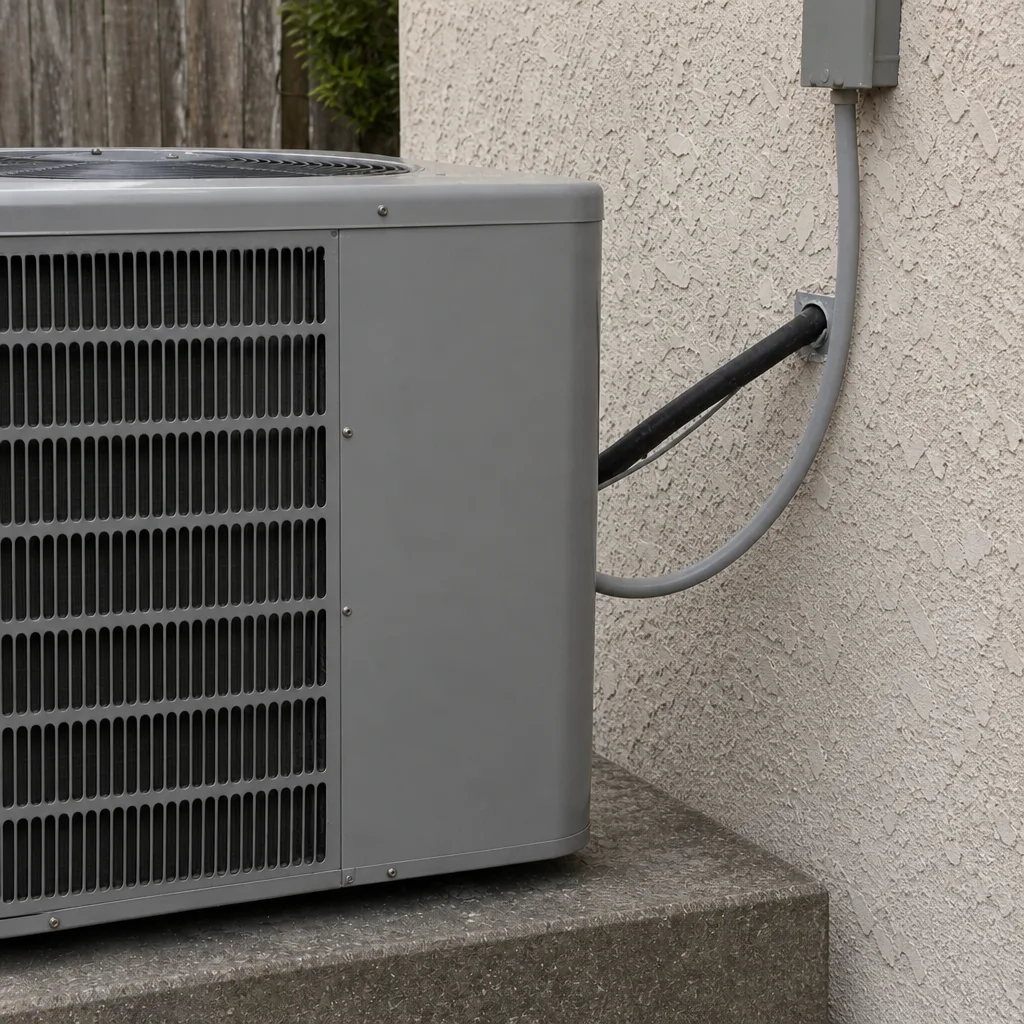
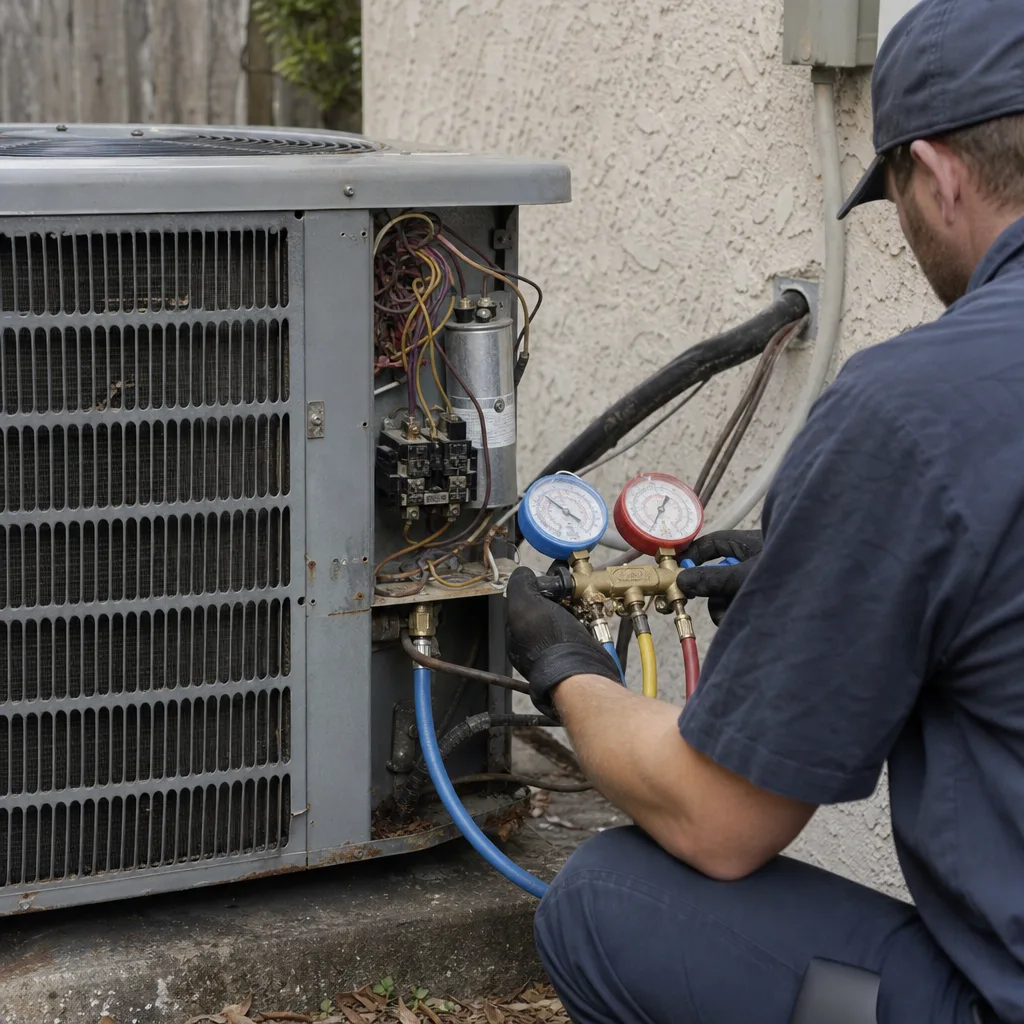 Before
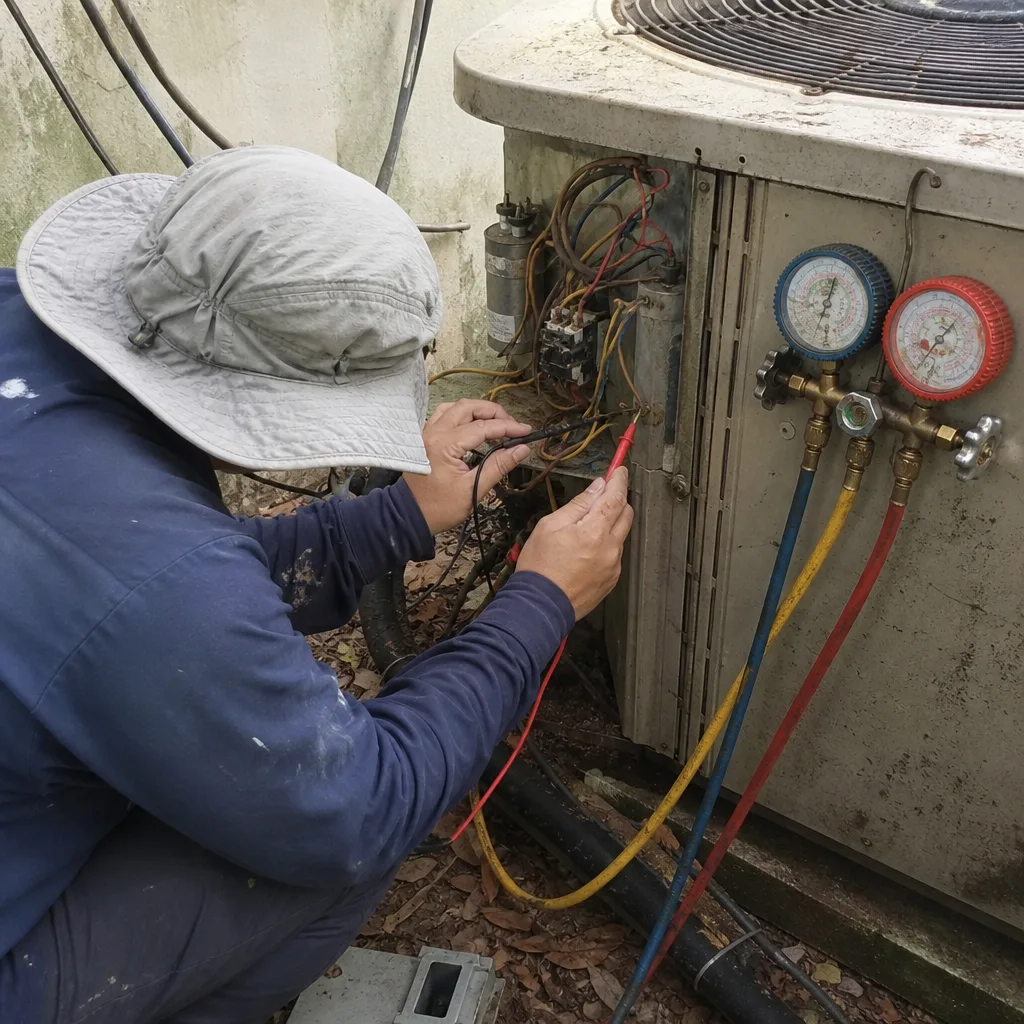
 After
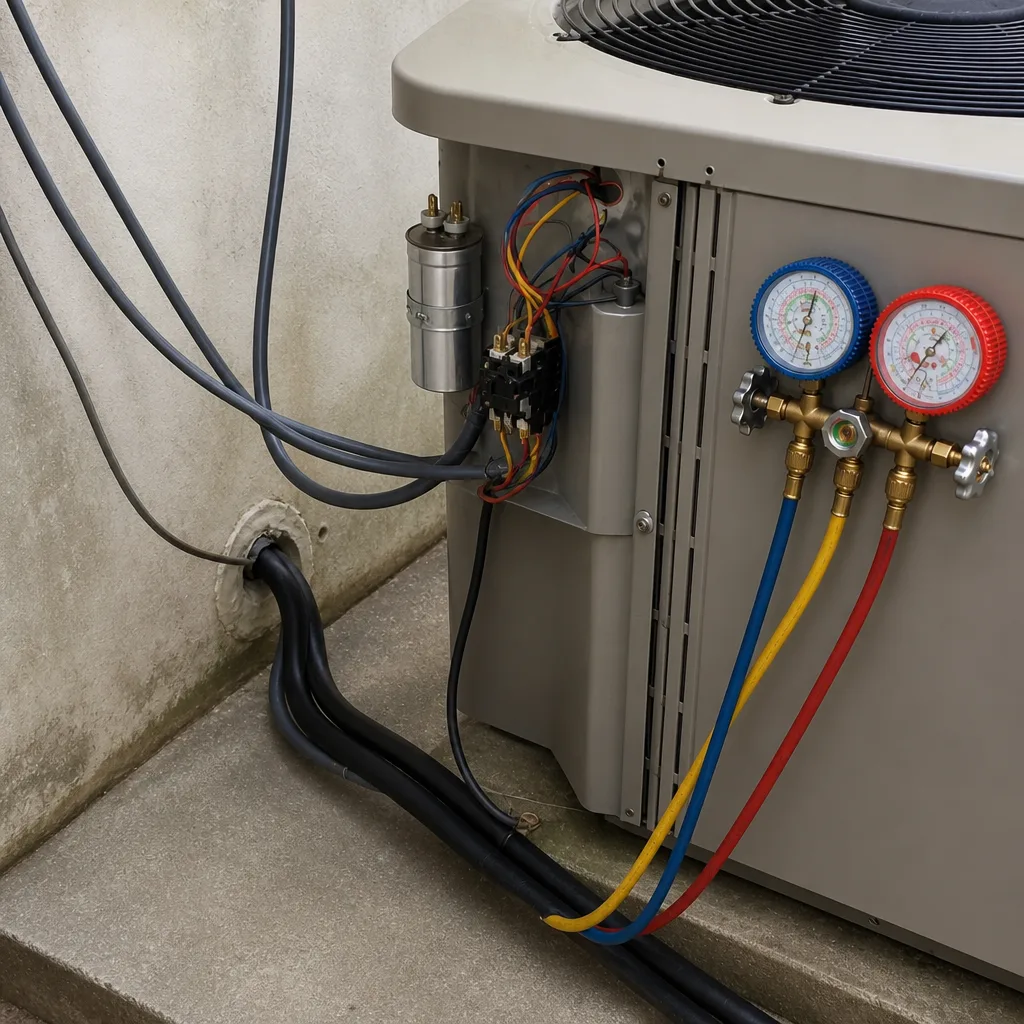
 Before
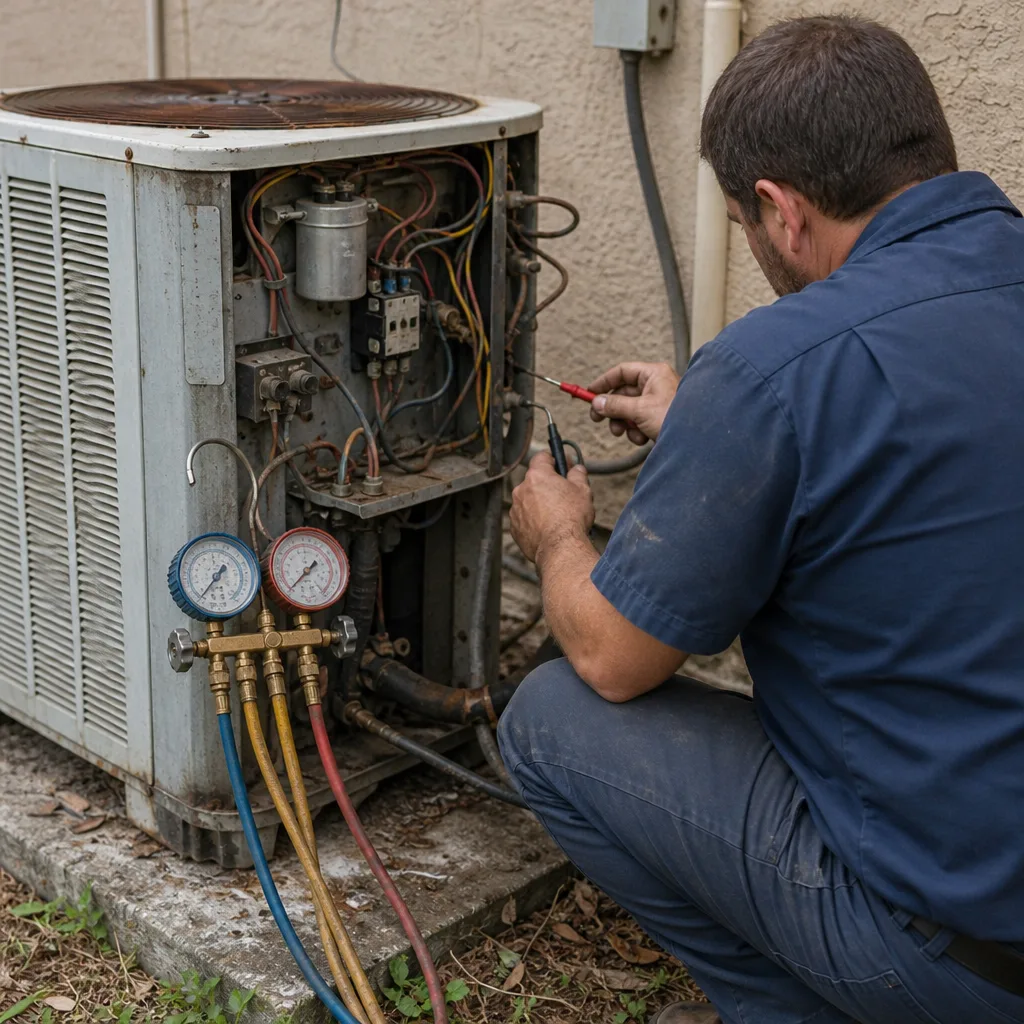
 After
 Before
 After
When to Call a Professional
Call when the breaker trips twice, when there’s any refrigerant symptom (ice, hissing, oily residue around fittings), when the compressor won’t start after you’ve verified the breaker and filter, when water is visibly leaking beyond the drain pan, when the thermostat shows a code you don’t recognize, or when you’ve cleared a float switch and it trips again within an hour. Any of those point to component failure that requires testing equipment and, in the case of refrigerant, EPA certification.
AC Repair Lehigh Acres offers free estimates in Lehigh Acres. Call (866) 389-4593. We answer 24/7. Fast dispatch from 7am to 7pm, Sunday through Friday. Cooling and heating sit under one number, so if a furnace issue turns up while we’re on the AC call, we handle it in the same visit instead of sending you to a second contractor. Our technicians have up to 14 years of experience on residential systems, and every call is a repair-first diagnosis.
Frequently Asked Questions
A tripped outdoor breaker, a failed capacitor, or a contactor that won’t close is the most likely cause when the indoor fan runs but the air stays warm. Check the thermostat mode and setpoint, then the outdoor breaker, then the filter before calling. If the fan runs and warm air persists, the issue is in the compressor circuit or the refrigerant side, and that requires a technician. Call (866) 389-4593 for an exact quote; estimates are free.
Once a year, ideally in spring before the long cooling season, is the baseline for a system in Lehigh Acres. Because the AC here runs nearly continuously from spring through fall, filters need more frequent attention than in cooler climates; check monthly during heavy-use months and replace when visibly dirty. Annual service catches small issues like a weakening capacitor before they fail in July.
No. Handling refrigerant, connecting gauges, and charging a system all require EPA Section 608 certification, and it’s a federal requirement, not a company preference. Beyond the legal side, adding refrigerant to a system with an undiagnosed leak treats the symptom and leaves the real problem in place. A technician has to find and repair the leak before recharging.
Ice on the indoor coil or the outdoor refrigerant line usually means restricted airflow or low refrigerant. Start with the filter and any closed registers, and check that the indoor coil isn’t blocked by dust. If those are clean and the system still ices, the likely cause is a leak that needs pressure testing. Turn the system off and let the ice thaw before a technician arrives. Call (866) 389-4593 to book a diagnostic; estimates are free.
We work on Carrier, Trane, Lennox, Goodman, Rheem, York, Daikin, Bryant, and American Standard, which covers the vast majority of systems installed in Lehigh Acres homes. Our technicians are trained on all nine. You don’t need to replace a system to match a preferred brand; we diagnose and repair what you already own. If your system needs a full replacement, see Lehigh Acres for local details.
Repair usually makes sense when the failed part is a capacitor, contactor, blower motor, or drain component, and the system is otherwise in good shape. Replacement becomes the better call when the compressor has failed, the coil is leaking, or the repair cost approaches a significant share of a new system. A repair-first diagnosis and a written estimate give you the facts to decide. Call (866) 389-4593; estimates are free.
The Bottom Line
Most AC failures in Lehigh Acres come down to a short list: the breaker, the float switch, the filter, the capacitor, or a refrigerant leak. The first three are homeowner-checkable in minutes and resolve a surprising share of service calls before any technician arrives. The last two need certification, testing equipment, and a specialist. Learn the symptom-to-cause map, keep the filter clean, don’t bypass safety switches, and bring the thermostat code and the brand to the call. That’s the difference between a fast diagnosis and a long afternoon. When you need help, call (866) 389-4593. We answer 24/7. Fast dispatch from 7am to 7pm, Sunday through Friday.
Written by the team at AC Repair Lehigh Acres.