
Last updated November 15, 2026
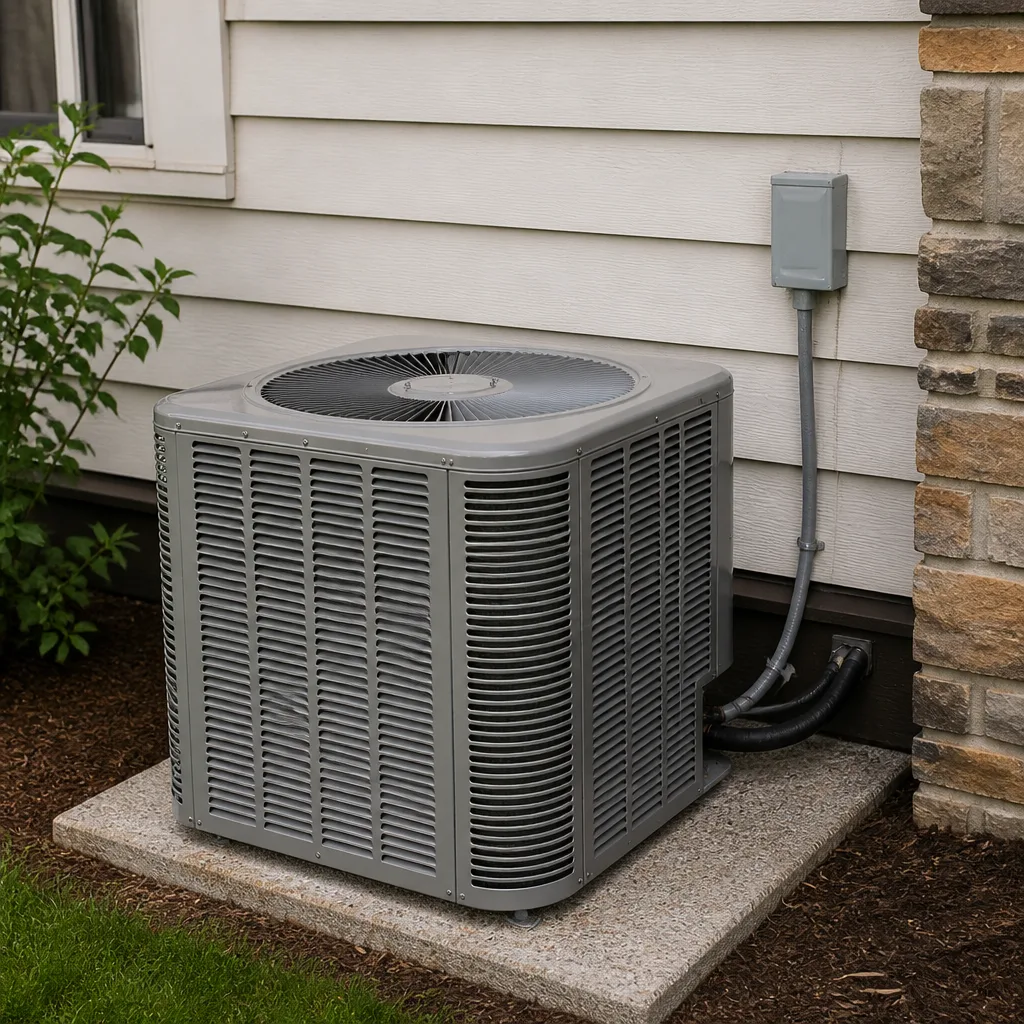 AC repair
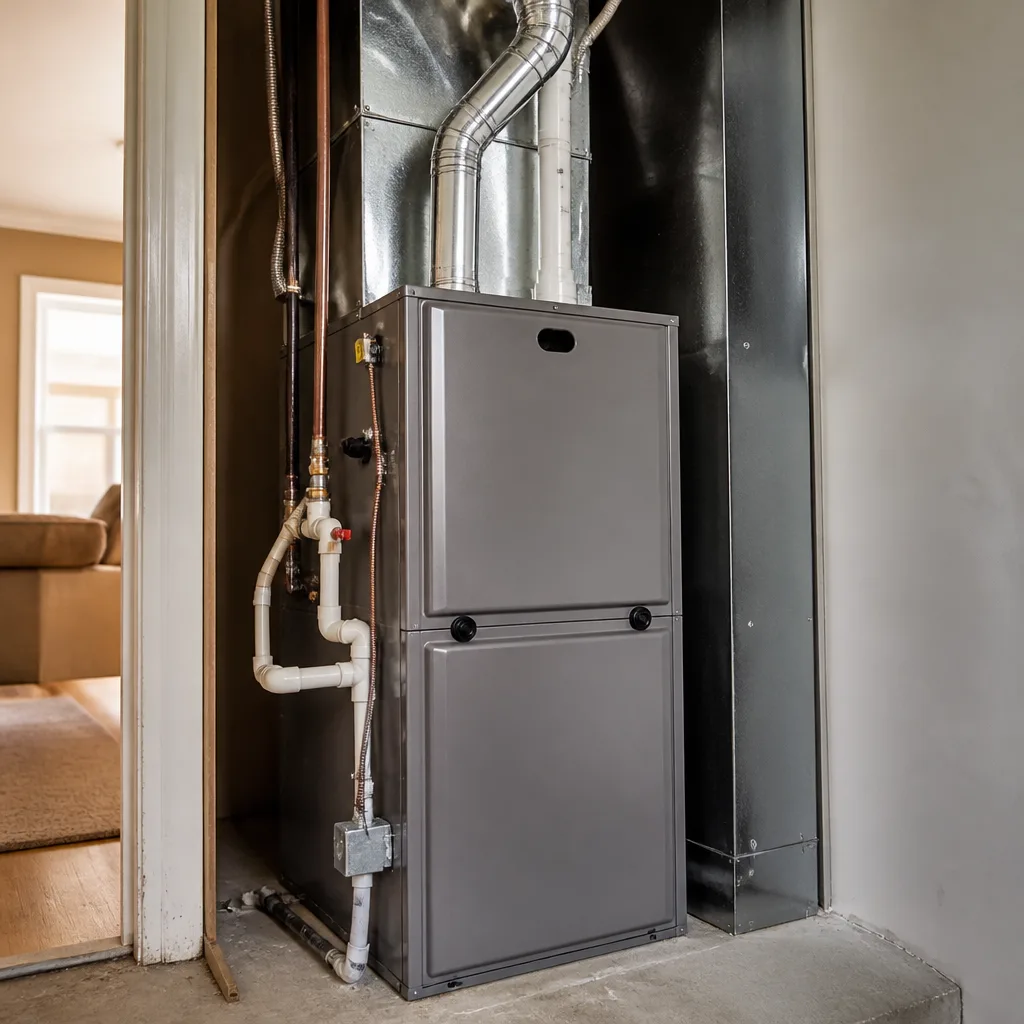 Furnace & heating
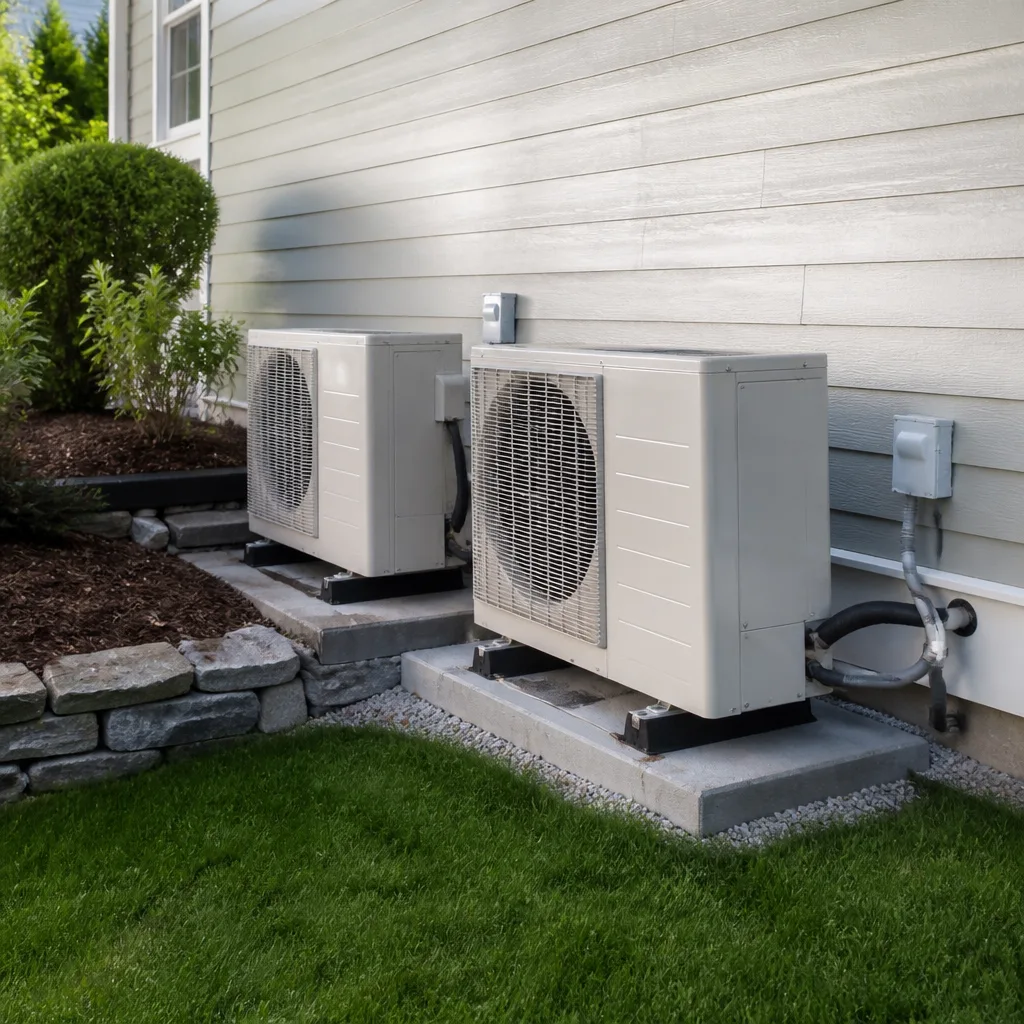 Heat pumps
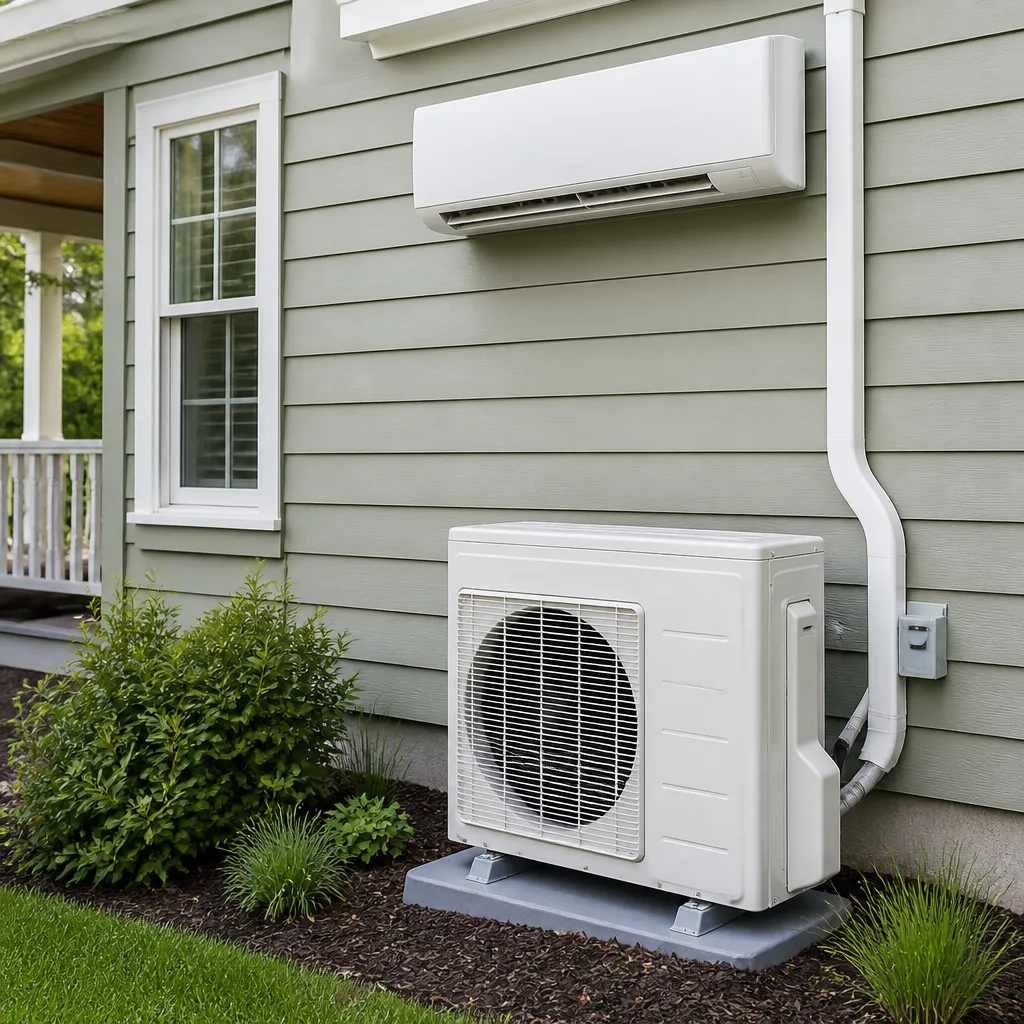 Ductless mini splits
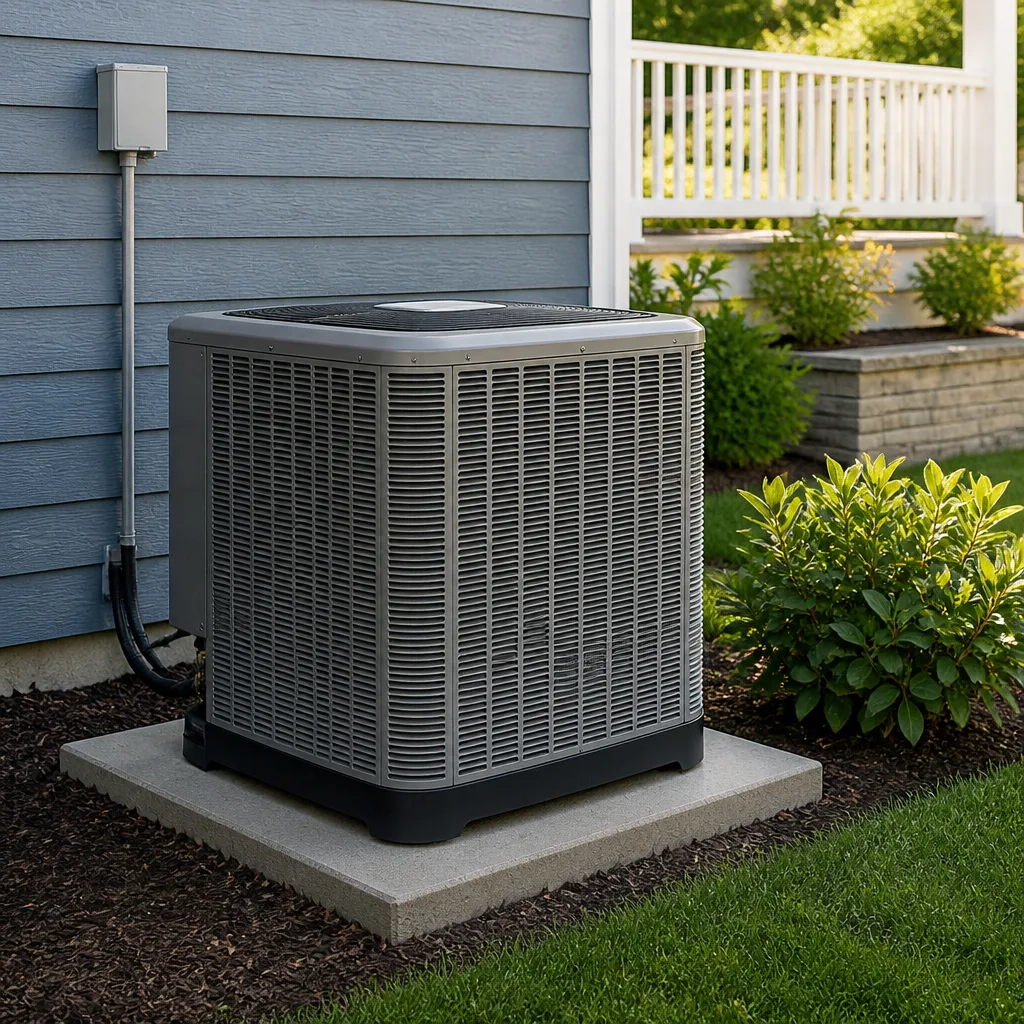 Carrier
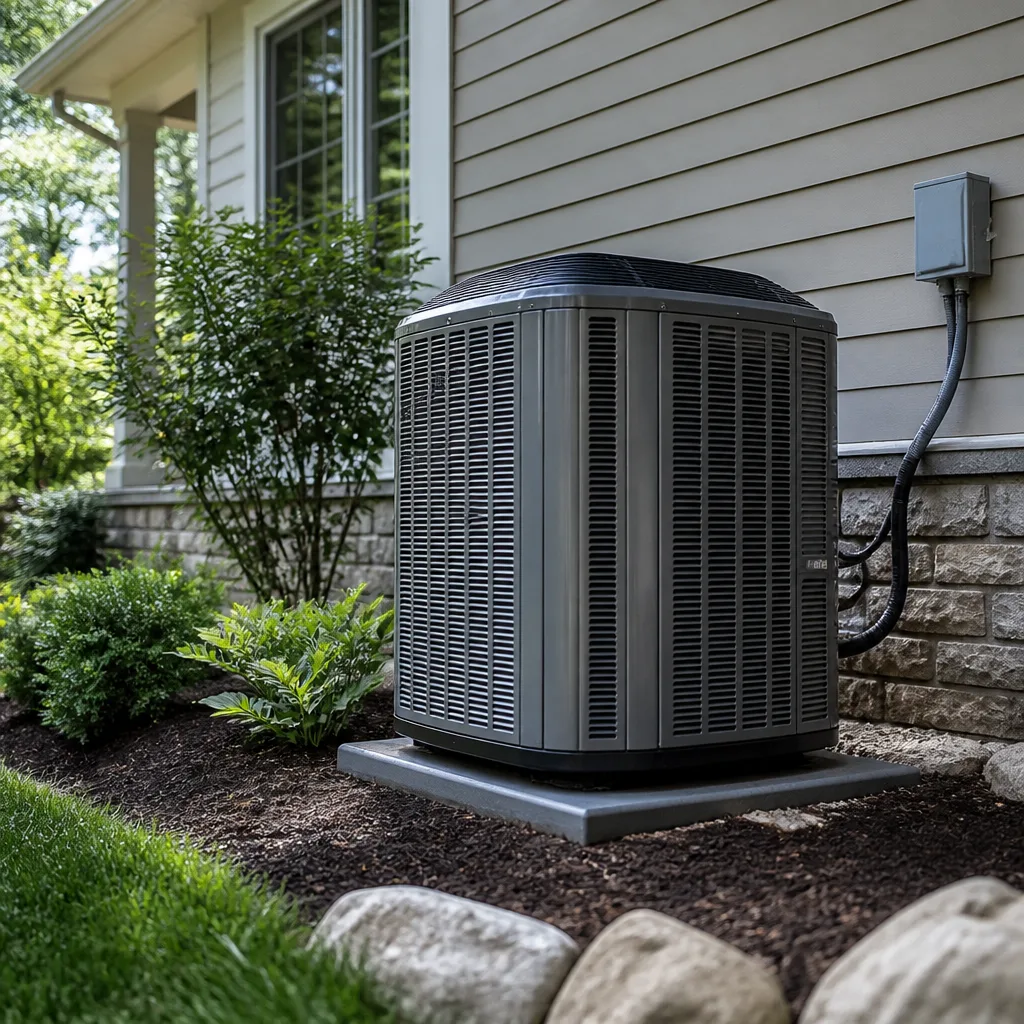 Trane
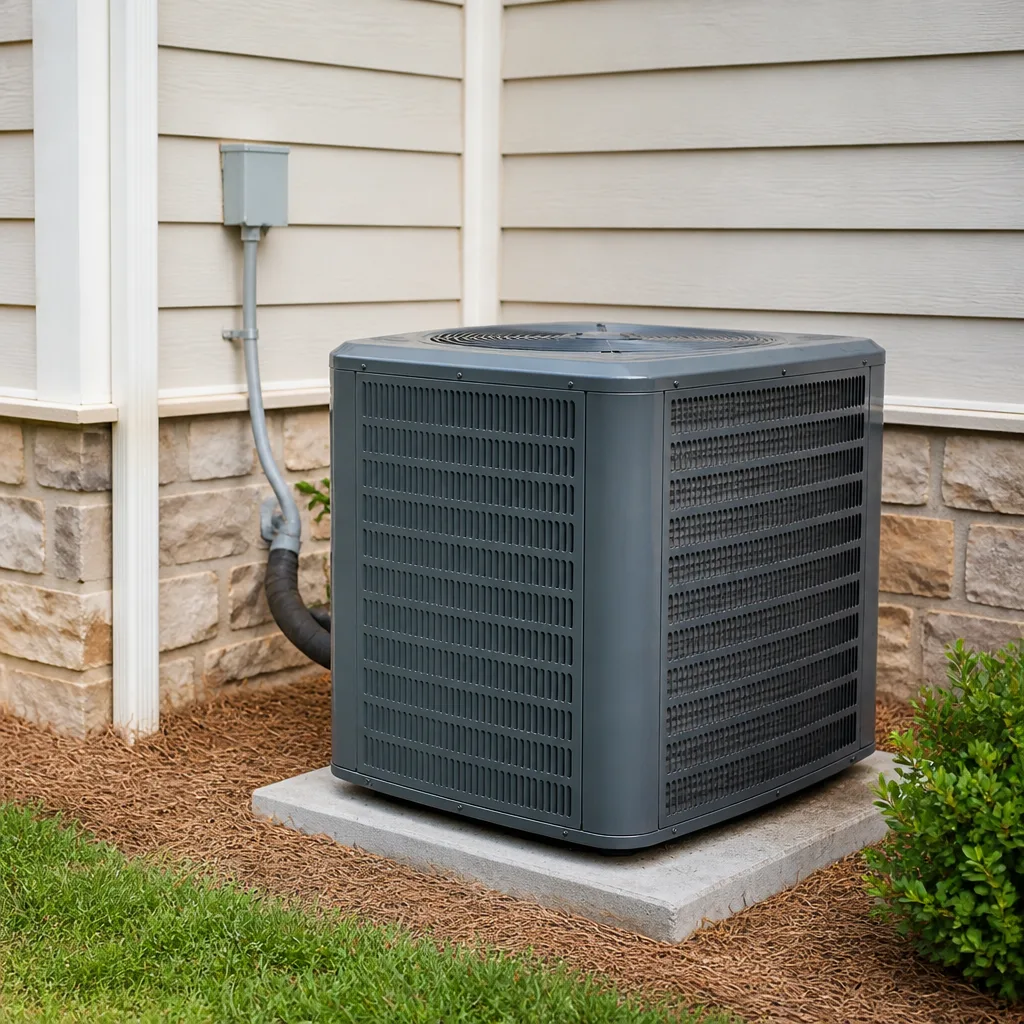 Goodman
Seasonal tune-up and full diagnostic on your Carrier, Trane, or Goodman system - readings shown to you before any repair is proposed
Diagnosis first, numbers second - you approve the repair price before a single part goes in.
Get your free estimateSeasonal HVAC Care for Lehigh Acres: Year-Round Homeowner’s Guide
Most HVAC advice you’ll read was written for a place with four distinct seasons. Lehigh Acres doesn’t work that way. What we actually get is two intense stretches, peak cooling and wet season, separated by two narrow transition windows that most homeowners let slip by. Those windows, not the hot months, are where the cheapest and most effective care happens. In this guide we’ll walk through a realistic two-season framework, show you what to inspect and service before humidity spikes, explain what a full summer reveals about your system in October, cover hurricane-season prep for outdoor equipment, and show you how to use the shoulder months instead of wasting them. Our aim is simple: give you a repeatable yearly rhythm that keeps your system dependable across the Lehigh Acres year.
Quick Answer
The best time to service your AC in Lehigh Acres is the six-week window between mid-October and Thanksgiving. Demand has eased, systems are off peak load, and there’s time to address what a full cooling season reveals before the next hot stretch. Pair that with a pre-wet-season checkup in April or May, and you have a two-window routine that covers cooling, humidity, and storm readiness for the whole year.
Styles & brands we work with
- AC repair
- Furnace & heating
- Heat pumps
- Ductless mini splits
- Carrier
- Trane
- Goodman
Table of Contents
- Why Lehigh Acres Has Two HVAC Seasons, Not Four
- Pre-Wet-Season Prep (April to May): What to Inspect and Service
- Hurricane Season Overlap: Preparing HVAC Equipment for Storms
- Post-Summer Assessment (October to November): What Summer Reveals
- The Shoulder Months: March and November
- The Mild Heating Season: Why Your Furnace Still Needs Attention
- Your Year-Round Seasonal Checklist
- Brand Matters: Getting the Right Technician for Your System
Why Lehigh Acres Has Two HVAC Seasons, Not Four
The national HVAC calendar says change your filter in spring, tune up in fall, and you’re done. That calendar assumes a cold winter that stresses heating equipment and a warm summer that stresses cooling. Here in southwest Florida, cooling is the dominant load for most of the year, and humidity, not temperature, is what shapes how your system performs. The practical result is two intense seasons: a long dry-to-warm stretch where your AC runs hard, and a wet/hurricane season where humidity climbs and storm risk peaks.
The transitions between those two seasons are narrow. In Lehigh Acres, that means the six weeks or so around mid-October through Thanksgiving, and again in April and May before the summer heat and humidity settle in. These are your best working windows because demand on HVAC technicians drops, systems aren’t running at full load, and problems a full cooling season has been quietly building get caught before the next round.
Thinking in four seasons also leads homeowners to skip the most important checks. A tune-up built for a Midwest fall doesn’t address condensate drain lines or surge protection for the outdoor unit. A spring checklist written for a cold climate doesn’t cover what pre-wet-season prep in Lehigh Acres actually needs. The framework below is built around the two-season reality, not a generic one.
- Peak cooling season: late spring into early fall. High runtime, high electrical load, longest hours for the compressor and blower.
- Wet/hurricane season: roughly June through November. Humidity climbs, condensate handling matters more, storm events put outdoor equipment at risk.
- Transition windows: mid-October to Thanksgiving, and April to May. The two best times to service, diagnose, and prepare.
Pre-Wet-Season Prep (April to May): What to Inspect and Service
April and May are when you set your system up to survive the wet season. The logic is straightforward: once humidity spikes, small problems get worse fast. A partial drain restriction that barely matters in a dry week becomes a water problem in July. Electrical components that have been taxed all spring are more vulnerable to surges when storm activity picks up. Pre-wet-season service is about catching those weaknesses before they’re compounded by heat and moisture.
What we look at in a pre-wet-season visit falls into a few clear categories:
Cooling and air-handling checks
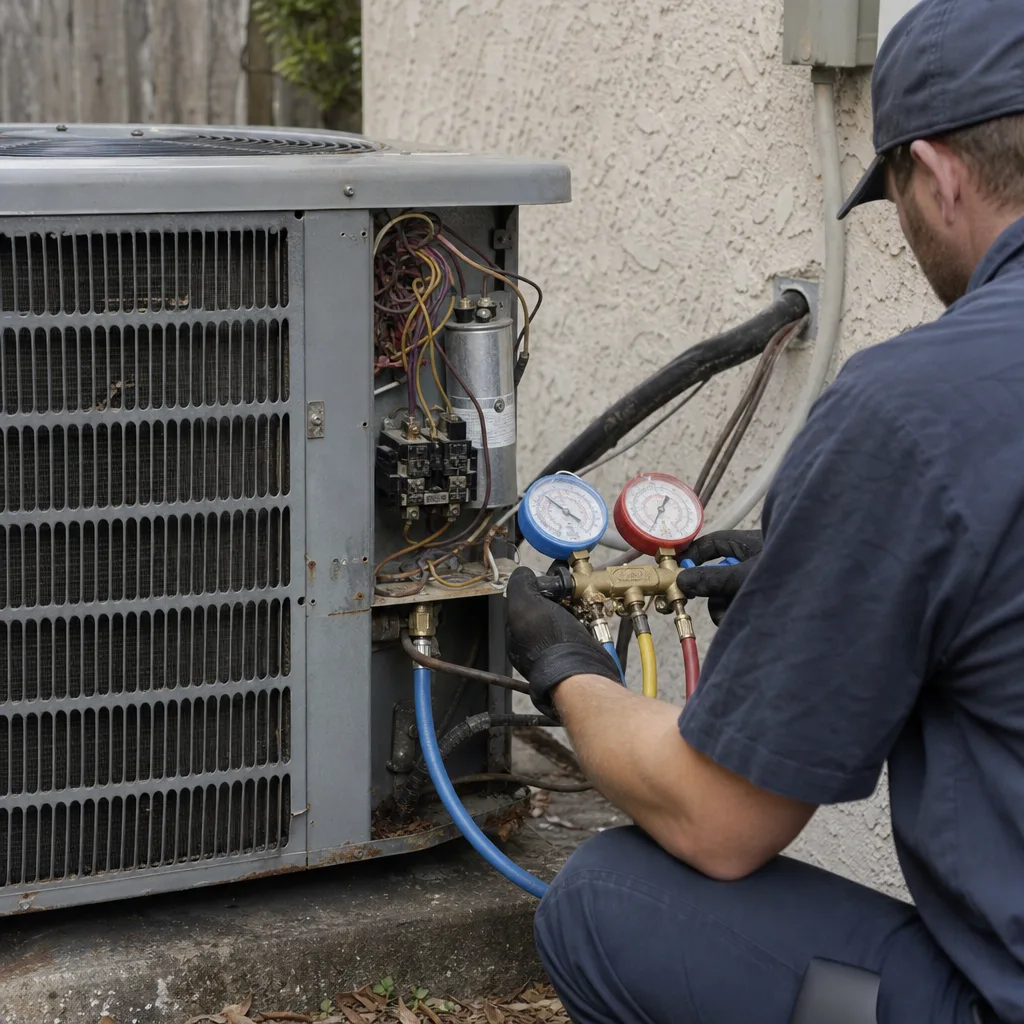
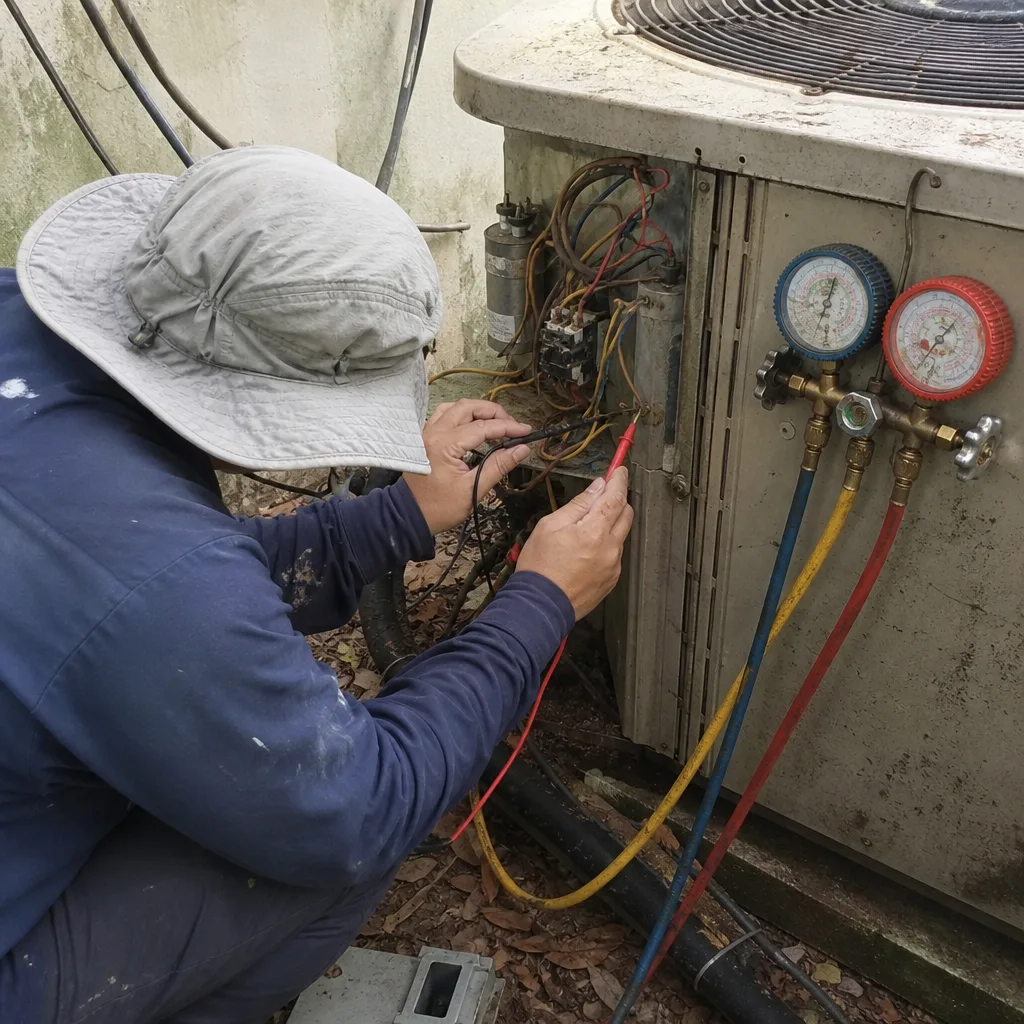
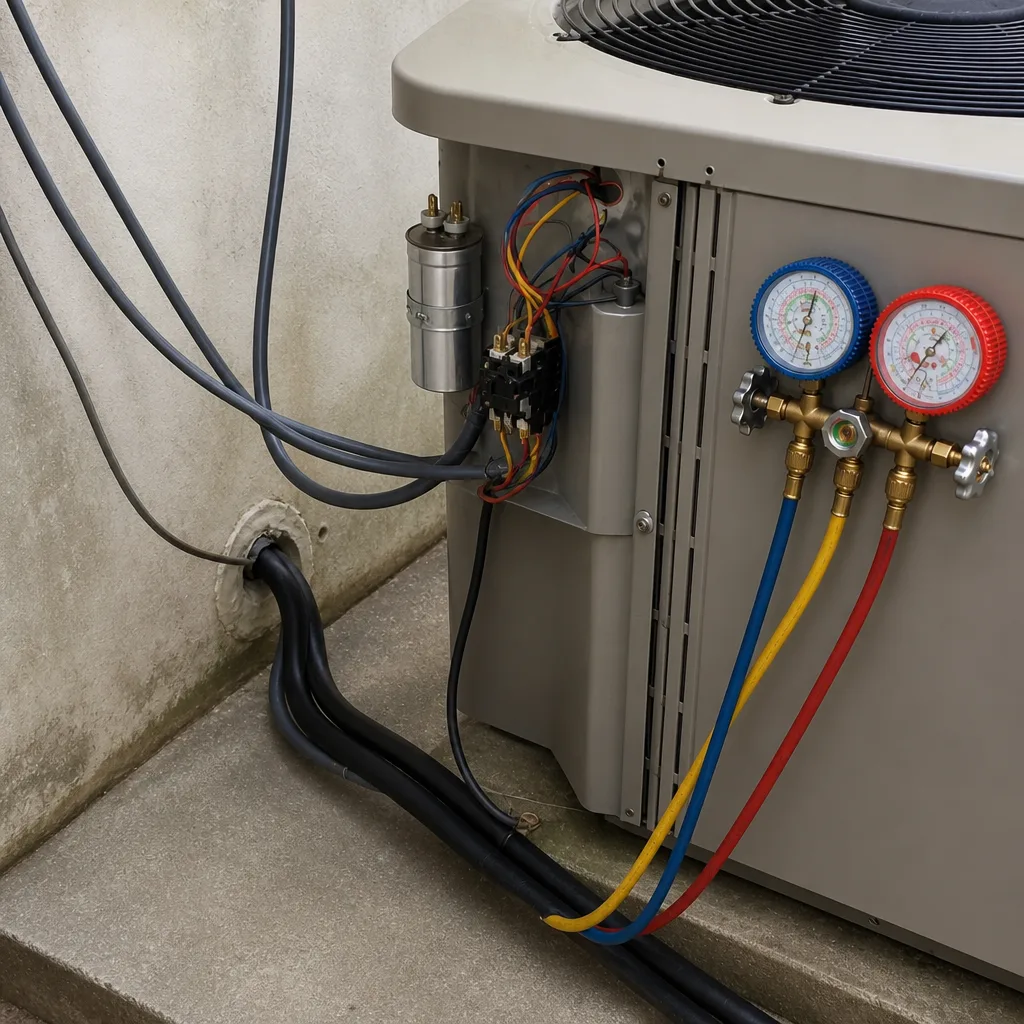
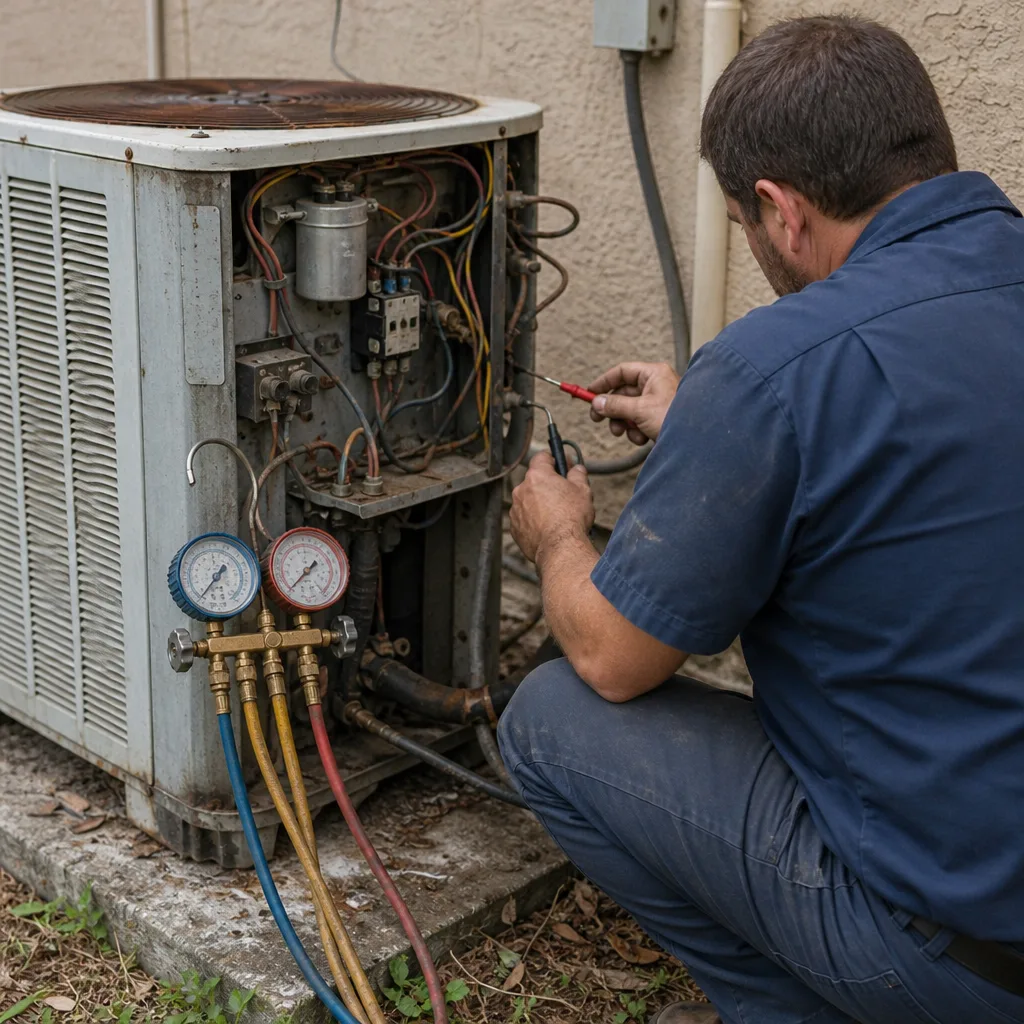
- Refrigerant charge and pressures. A system running slightly low on refrigerant works harder and can’t hold temperature as well once humidity climbs. Verification, not guesswork, is the point.
- Evaporator coil condition. A dirty coil reduces capacity and airflow. Inspect and clean as needed before the load gets high.
- Blower performance and airflow. Weak airflow is one of the quietest causes of poor cooling. Check the blower wheel, motor, and filter path.
- Thermostat function and setpoints. Make sure scheduling reflects how you actually live, and that nothing is fighting the system.
Condensate and humidity handling
In our experience, the condensate drain line is one of the most overlooked components in a Lehigh Acres home. During the wet season, your AC removes a lot of moisture from the air, and that moisture has to go somewhere. A slow drain or a clogged trap can back up into the pan, and from there into ceilings, closets, or floors. Clearing the drain line and confirming the pan and float switch work should be a standard part of any pre-wet-season checkup.
Surge protection for the outdoor unit
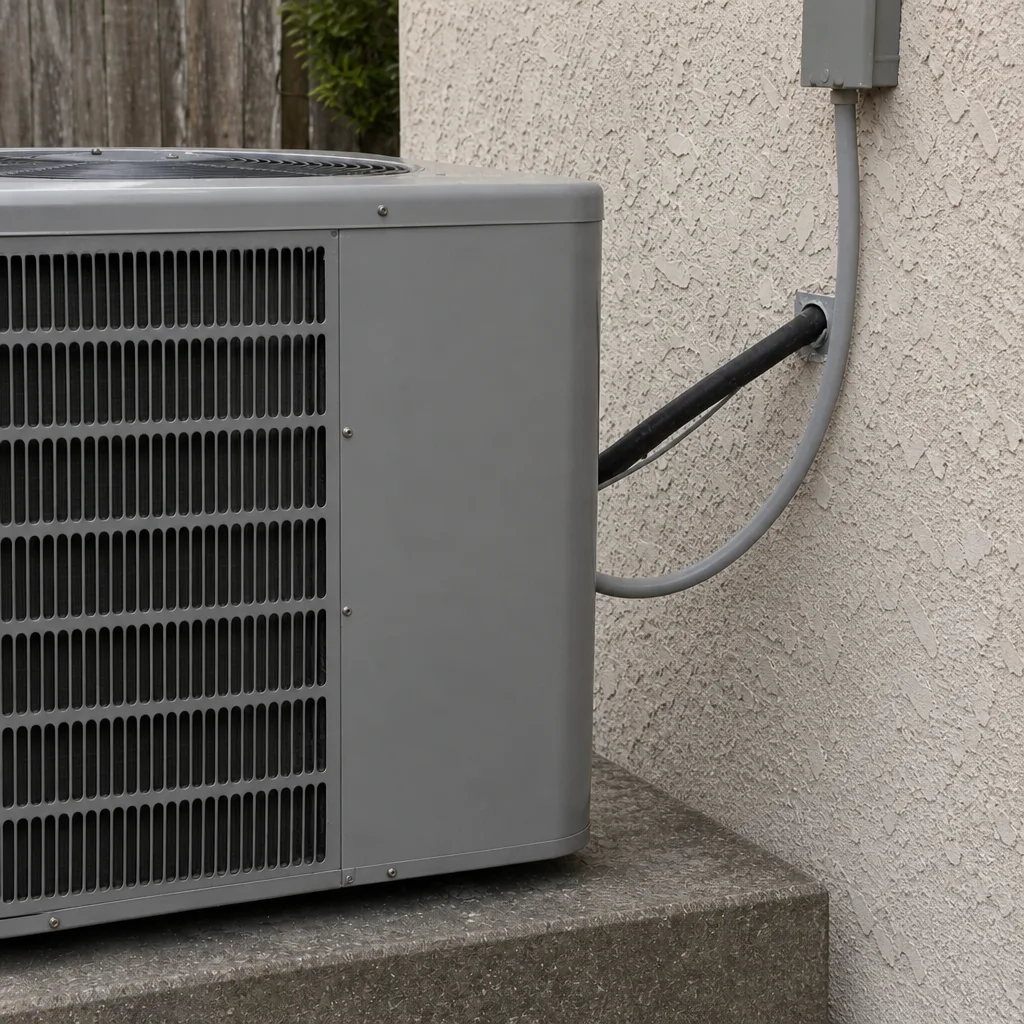
Storm season means lightning and power fluctuations. Your compressor and outdoor fan are among the more expensive components to replace, and a surge path into the equipment is a real exposure. Discussing surge protection for the outdoor unit during a spring visit is one of the more cost-effective preparations we recommend. It’s not glamorous, but it’s the kind of preparation that pays off quietly.
If you haven’t had a proper checkup in a while, this is also the moment to look at whether the system as a whole is keeping up. If you’re seeing rising bills or rooms that never feel cool, a repair-first diagnosis is the smarter starting point than guessing at a replacement. Learn more about our AC repair service if you’re unsure whether something needs fixing now or can hold until fall.
Hurricane Season Overlap: Preparing HVAC Equipment for Storms
Hurricane season overlaps directly with the wet season in Lehigh Acres, roughly June through November, and that means your outdoor HVAC equipment faces both moisture and wind exposure. The right preparation is less about dramatic action and more about a handful of habits done before anything is forecast. Do this calmly, not in a rush the day before a storm.
Before the storm
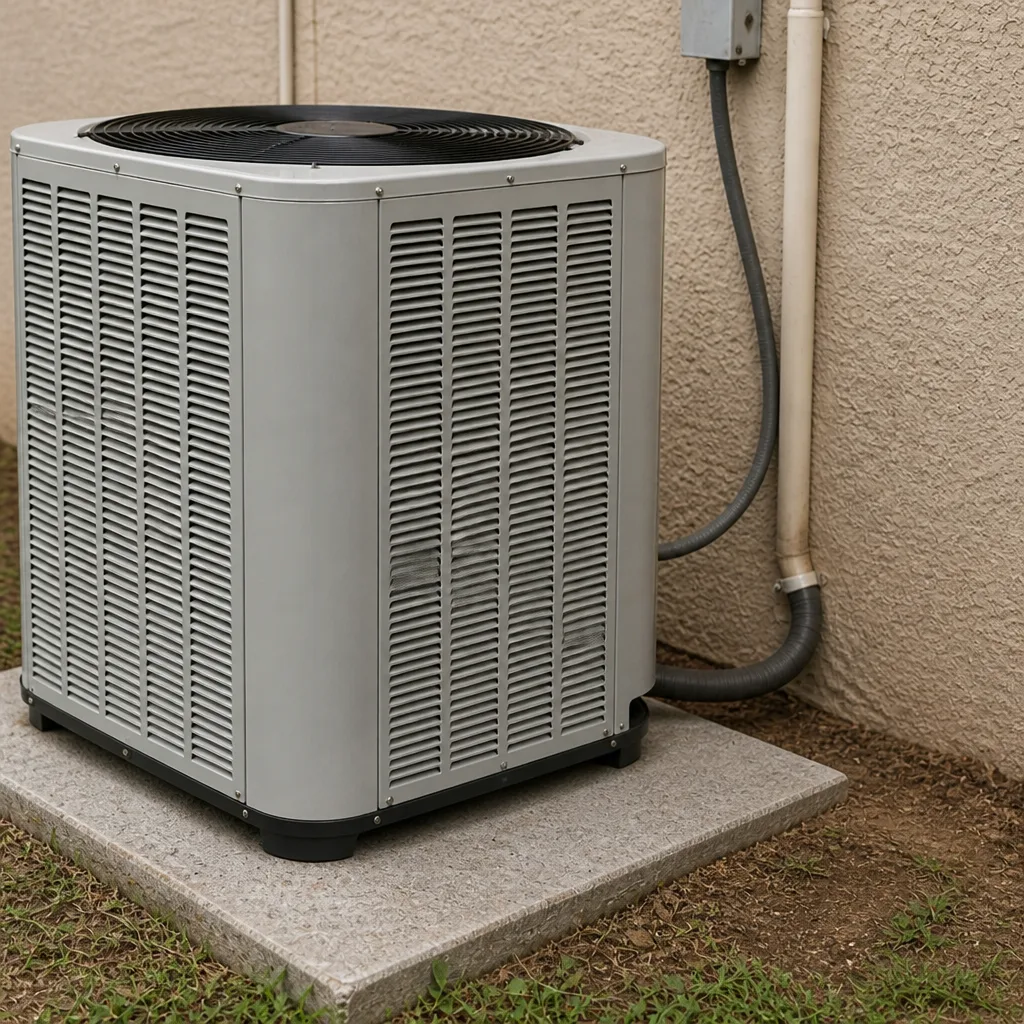
- Check outdoor unit tie-downs. Confirm the pad or bracket and fastening are secure. A unit that shifts can damage the refrigerant lines and the electrical connections.
- Clear the area around the unit. Loose items, branches, and debris can become projectiles. Trim what could come loose.
- Note how to shut off the equipment. Know where the disconnect and breaker are. During an extended outage or flooding risk, turning the system off is safer than letting it cycle through unstable power.
- Remove or secure covers where appropriate. If a protective cover is used during a storm, don’t run the system with it in place. Understand the distinction before you need it.
After the storm: restart protocol
- Inspect before restarting. Look for visible damage, shifted equipment, water intrusion near the air handler, or debris in the outdoor unit.
- Wait for stable power. Restart after utility power is steady. Cycling power on and off stresses the compressor.
- Check airflow and cooling once running. If it doesn’t cool normally, or you hear or smell something unusual, stop and call a technician rather than pushing it.
- Book a checkup if the system was submerged or took on water. This is not a restart-it-and-see situation. Electrical components near water are a real hazard.
Most of the storm prep work is about removing risk from the equation, not about scrambling when a forecast changes. If a storm passes and your Carrier, Trane, or Lennox system isn’t cooling the way it did, that’s a signal to get it looked at before it becomes a bigger repair.
Post-Summer Assessment (October to November): What Summer Reveals
A full cooling season tells you more about your system than any single appointment can. When we look at a system in October or November, we’re not running a generic tune-up. We’re looking for the wear that a long, hot season exposes: coil condition after months of running, refrigerant charge stability, blower performance once filters have cycled through, and the small failures that show up over time. This is the most valuable diagnostic window of the year.
What that October-to-November assessment typically surfaces:
- Evaporator and condenser coil condition. Coils accumulate dirt over months of running. Fouled coils cut capacity and make the compressor work harder than it should.
- Refrigerant charge integrity. If a charge has drifted down, the summer load often reveals it plainly. Finding out in October gives you time to repair before next summer.
- Blower wheel and motor performance. Reduced airflow is often visible as inconsistent cooling or higher bills rather than a full failure.
- Electrical connections and contactors. Heat cycling over a season stresses connections. Tightening and inspecting is part of a proper post-season look.
- Drain line and cabinet condition. Wrapping up wet season means confirming nothing is leaking or backing up now that the system slows down.
The reason the October-to-November window matters so much is timing. You’re not scrambling to get a system fixed when it’s 95 degrees and every technician is booked solid. You have weeks, not hours, to plan a repair or an upgrade. If the assessment points to a replacement, it’s the right season to talk about AC installation without pressure. And if it just points to a repair, you get it done and forget about it until spring.
The Shoulder Months: March and November
Here’s a pattern we see over and over: homeowners in Lehigh Acres discover in March or November that their system has been underperforming all season and they didn’t notice. The reason is simple. When temperatures are moderate and humidity is manageable, a weakened system can still cool the house, so nothing seems wrong. Then peak load arrives and the gap appears. By then you’re dealing with a more urgent problem at the worst time of year.
The shoulder months are your chance to catch that gap. In March, temperatures are on the rise but the system isn’t fully loaded yet. In November, cooling demand has dropped and you’re looking back at a whole summer of wear. Both months are built-in diagnostic opportunities, and both get skipped because the house feels fine.
What to check during the shoulder months
- Cooling consistency room to room. A room that’s always a few degrees warmer is a signal worth investigating.
- Runtime patterns. Is the system running longer than it used to for the same setpoint? That’s a change worth noting.
- Electricity usage trends. A creeping increase on similar weather days points to declining efficiency.
- Unusual sounds or smells. A rattle, a hum, a musty odor when the system starts. None of these should be normal.
What we’ve found is that the small signals in March or November are the cheapest ones to fix. By July those same signals often mean a larger repair. If you notice any of the above, a repair-first diagnosis is far more useful than assuming the system is just getting older.
The Mild Heating Season: Why Your Furnace Still Needs Attention
Cooling dominates the HVAC conversation in Lehigh Acres, and rightly so. But there is a heating season here, even if it’s short and mild. When temperatures dip, most homes in the area run heat pumps or gas furnaces that have been idle for months. Idle equipment is where problems hide. A furnace that sat unused through the summer isn’t always ready when you first need it. A heat pump that worked fine last winter can surface issues after months of sitting.
The practical approach is not to over-prepare for winter. It’s to check that the system will start and run safely when called upon. In our experience, this is a good item for the October-to-November visit, when the cooling focus is done and there’s a natural pause before the first cool nights.
What to include in a heating check:
- Gas furnace safety inspection. Combustion checks, venting, and heat exchanger condition. These are safety items, not optional extras. If you smell gas or suspect a problem, shut the system down and call a professional.
- Heat pump heating cycle test. Confirm the system switches over and delivers heat normally, without relying on backup heat as a workaround.
- Thermostat function in heating mode. Check setpoints, scheduling, and changeover behavior.
- Filter condition after cooling season. Don’t carry a clogged filter into heating season.
Because we handle both cooling and heating under one number, we can look at the whole system in a single visit. That’s one of the reasons we focus our practice entirely on HVAC: heating and cooling are two sides of the same equipment, and diagnosing them separately wastes time and money. If you have a furnace issue after a cooling repair, it’s the same call, same technician rotation, and same conversation.
If you’re dealing with a furnace or heat pump problem right now, our AC repair Lehigh Acres team handles heating as well, and a diagnostic visit will tell you what’s actually going on rather than what a guess says it is.
Your Year-Round Seasonal Checklist
Here is the framework boiled down into a repeating annual rhythm. File this one away and use it as your calendar.
April to May: Pre-Wet-Season Prep
- Schedule a full cooling system checkup before humidity climbs.
- Clear the condensate drain line and confirm the float switch works.
- Inspect evaporator coil and confirm refrigerant charge.
- Check blower airflow, thermostat function, and filter condition.
- Discuss surge protection for the outdoor unit.
- Confirm outdoor unit tie-downs and clear the perimeter.
June through November: Wet and Storm Season
- Check the filter monthly. Wet-season humidity plus heavy runtime makes filters load up faster.
- Watch for water near the air handler or drain line.
- Before a storm, secure the outdoor unit and know your shutoff locations.
- After a storm, inspect before restart, and wait for stable power.
- Stop running the system and call if it’s behaving oddly after a power event.
Mid-October to Thanksgiving: Post-Summer Assessment
- Book a full assessment to look at coil condition, charge, and blower performance.
- Review the season’s electrical usage and runtime for signals.
- Test the heating cycle and inspect the furnace or heat pump for safe operation.
- Plan any repair or installation work for the mild-weather window, not the peak.
March and November: Shoulder-Month Watch
- Listen for new sounds, smells, or rattles.
- Compare room-to-room comfort and note anything off.
- Check runtime and electricity trends against similar weather.
- Call for a diagnostic if anything has changed, before it becomes urgent.
If you’re new to the area or just want a baseline, starting at our Lehigh Acres page is a good way to get oriented to how we work locally. The checklist above is the same one we use to structure our seasonal visits.
Brand Matters: Getting the Right Technician for Your System
One thing that shapes seasonal care in Lehigh Acres more than most homeowners realize: the brand and model installed in your home. Not because one brand is better than another in some abstract sense, but because knowing the specific equipment means diagnosing it faster and getting the repair right the first time. A generalist making a first attempt at unfamiliar equipment wastes your time and their visit. A technician who’s worked on your brand many times over knows what to look for.
Our technicians are certified to service nine of the most widely installed residential HVAC brands: Carrier, Trane, Lennox, Goodman, Rheem, York, Daikin, Bryant, and American Standard. That covers the vast majority of systems in local homes. If yours is an American Standard that’s been running for a full season, or a Trane that doesn’t seem to cool like it used to, we approach it as a system we already know, not one we have to learn on the job. Our technicians have up to 14 years of experience, and our focus is strictly HVAC, which means every technician, every call, every day is spent on heating and air conditioning. No plumbing, no roofing, no jack-of-all-trades distractions.
We’re also brand-neutral. We diagnose the equipment you have rather than steering you toward a preferred line or an unnecessary replacement. If a Carrier system needs a repair, we’ll tell you the repair is the answer, not an upsell. That’s the whole point of a repair-first approach. It also means when a replacement is genuinely the right call, you can trust that recommendation because it’s not the default.
For seasonal care specifically, brand familiarity pays off in the details. Knowing where a specific model’s known weak points show up, how its controls behave, and what its typical failure patterns look like over a full Lehigh Acres summer means our October assessment is more useful. It’s not a generic checklist; it’s a targeted look at the equipment you own.
Common Mistakes to Avoid
- Treating the year like four seasons. Following a spring/fall tune-up calendar built for a colder climate means skipping the wet-season prep and post-summer assessment that actually matter here. The right windows are April to May and mid-October to Thanksgiving.
- Waiting until it’s hot to book a checkup. When peak cooling arrives, technicians are booked solid and every issue feels urgent. Using the October-to-November window gives you time to plan the fix instead of rushing it.
- Ignoring the condensate drain line. During the wet season, your system pulls a lot of moisture out of the air. A slow drain becomes a water problem in a hurry. Clear it as part of spring prep.
- Skipping the heating check because “it’s warm here.” The heating season is short, but idle equipment is where problems hide. A furnace or heat pump that sat unused all summer deserves a safety check before the first cool night.
- Restarting the outdoor unit after a storm without looking. Wait for stable power and inspect for shift, water, and debris before restarting. Cycling power through an unstable supply is hard on the compressor.
- Missing the shoulder-month signals. A room that’s a few degrees warmer, a creep in electricity usage, or a new rattle in March is a cheap fix. The same signal in July is a bigger one.
- Assuming brand doesn’t matter for repair. A technician unfamiliar with your American Standard or Lennox will spend longer and may miss the actual cause. Choose someone who works on your brand routinely.
See the difference
 Before
 After
 Before
 After
 Before
 After
When to Call a Professional
Some seasonal HVAC care is watch-and-check. Other situations call for a technician. Call a professional if your system isn’t cooling to its usual level, if you notice water near the air handler or the drain line, if there’s a new rattle, hum, or smell when the system starts, or if it ran through a storm without a proper inspection. Heating issues deserve the same urgency: gas smells, odd noises from the furnace, or heat that doesn’t come on all warrant a call. Refrigerant work, electrical components, and gas furnace internals are not things to take on without training. Those are hazards, not projects.
AC Repair Lehigh Acres offers free estimates in Lehigh Acres. Call (866) 389-4593, and we’ll diagnose what’s actually happening with your system rather than guess at a replacement. We answer 24/7, with fast dispatch from 7am to 7pm, Sunday through Friday. A call outside dispatch hours is booked into the next opening.
Frequently Asked Questions
Mid-October through Thanksgiving is the single best window. Systems are off peak load, technicians aren’t booked solid on emergencies, and you have six weeks or so to fix anything a full cooling season revealed. Pair it with an April-to-May checkup and you cover both major transitions in the year.
Yes, because idle equipment is where problems hide. A furnace or heat pump that sat unused all summer can develop issues that only show up when you first call on it. A short heating check in October or November is cheap insurance for the few cool nights Lehigh Acres gets. Call (866) 389-4593 if you want it added to your seasonal visit.
Start with tie-downs and fastening, clear the area of anything that could become a projectile, know where the disconnect and breaker are, and wait for stable power before restarting after an outage. Inspect for water, shift, or debris before restarting. If the system was submerged or took on water, don’t restart it. Call a technician.
During moderate weather, a weakened system can still cool the house, so nothing feels wrong. A full cooling season then exposes wear in the coils, refrigerant charge, and blower that wasn’t obvious at lower load. That’s why the October-to-November window is the best time to catch it, before it becomes urgent. If something feels off, call (866) 389-4593 for a diagnostic.
Very likely, yes. Our technicians are certified to service Carrier, Trane, Lennox, Goodman, Rheem, York, Daikin, Bryant, and American Standard, which covers the vast majority of residential systems in the area. We service the equipment you own rather than steering you toward a preferred brand. Call (866) 389-4593 with your model and we can confirm.
Most of the time, repair is the right answer. Our brand-neutral, repair-first approach means we tell you what the equipment needs rather than what’s easiest to sell. A replacement is the right call when the repair cost or reliability has crossed a line you don’t want to keep paying for. The October window gives you time to plan that decision without pressure. Call (866) 389-4593 for an honest assessment.
The Bottom Line
Lehigh Acres doesn’t give you four seasons of HVAC care. It gives you two intense ones and two narrow windows that pay for themselves. Use April and May to get ahead of humidity: clear the drain line, verify the charge, inspect the coil, think about surge protection, and secure the outdoor unit. Use mid-October through Thanksgiving to look back at a full cooling season and catch what it revealed, plus check the heating system before you need it. Watch March and November for the small signals that get missed. And work with a technician who knows your brand, because diagnostic depth beats guesswork every time. A simple, repeatable rhythm is the whole game.
If you’d rather have a trained eye do the seasonal walk-through, we’re strictly HVAC and we work on the system you already own. AC Repair Lehigh Acres offers free estimates in Lehigh Acres. Call (866) 389-4593 to schedule your pre-wet-season or post-summer assessment. We answer 24/7, with fast dispatch from 7am to 7pm, Sunday through Friday. A call outside dispatch hours is booked into the next opening.
Written by the team at AC Repair Lehigh Acres.